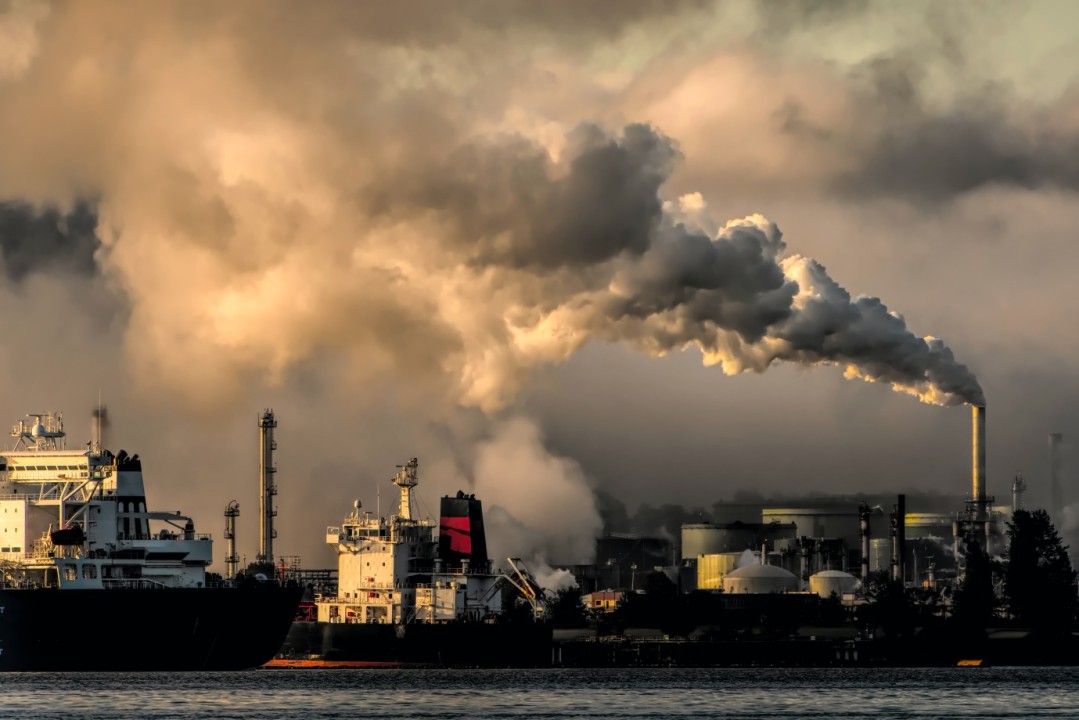
A research team led by Minde An at Massachusetts Institute of Technology examining the emissions of two specific perfluorocarbons, tetrafluoromethane and hexafluoroethane, both with atmospheric lifetimes of 50,000 and 10,000 years respectively have found that emissions of two of the most potent greenhouse gases have substantially increased in China over the last decade.
Perfluorocarbons are used in the manufacturing processes for flat-panel TVs and semiconductors, or as by-products from aluminium smelting. They are far more effective at trapping heat in the atmosphere than CO2, and can persist in the Earth’s atmosphere for thousands of years, unlike CO2 which can persist for up to 200 years.
By analysing atmospheric observations in nine cities across China from 2011 to 2021, the research team found that both gases exhibited an increase of 78% in emissions in China and, by 2020, represented 64-66% of global emissions for tetrafluoromethane and hexafluoroethane. However, while levels of fluorocarbon emissions are increasing at an alarming rate, CO2 still accounts for about 76% of total greenhouse gas emissions.
The increase in emissions from China was sufficient to account for the global emission increases over that same period, suggesting that China is the dominant driver in tetrafluoromethane and hexafluoroethane release into the atmosphere globally.
The emissions were found to mainly originate from the less populated industrial zones in the western regions of China, and are thought to be due to the role of perfluorocarbons in the aluminium industry.
Read also: Study finds climate crisis is making days longer
China is the world’s largest producer and exporter of aluminium, with the country’s production reaching a record-high output of 41.5m tonnes last year. With the rapid expansion of the country’s aluminium and semiconductor industries, these ongoing high levels of fluorocarbon emissions could pose a particular threat to China’s carbon neutrality goal and global climate mitigation. The country is aiming to achieve “peak carbon” emission by 2030 and become “carbon neutral” by 2060.
The authors suggest that with technological innovation and incorporation of the aluminium industry into the carbon market, or a national carbon trading scheme allowing emitters to buy or sell emission credits, it is possible that these rising levels could be reduced.
While being a significant source of CO2 emissions, aluminium production is also essential in the energy transition from fossil fuels to cleaner renewable energy sources by helping produce many low-carbon technologies such as solar panels, electric vehicles and wind turbines.
Organisations such as the World Economic Forum argue that the aluminium industry must act now to find a balance between ensuring efficient production alongside mitigating the industry’s negative impacts on the climate.
Story was adapted from the Guardian.
