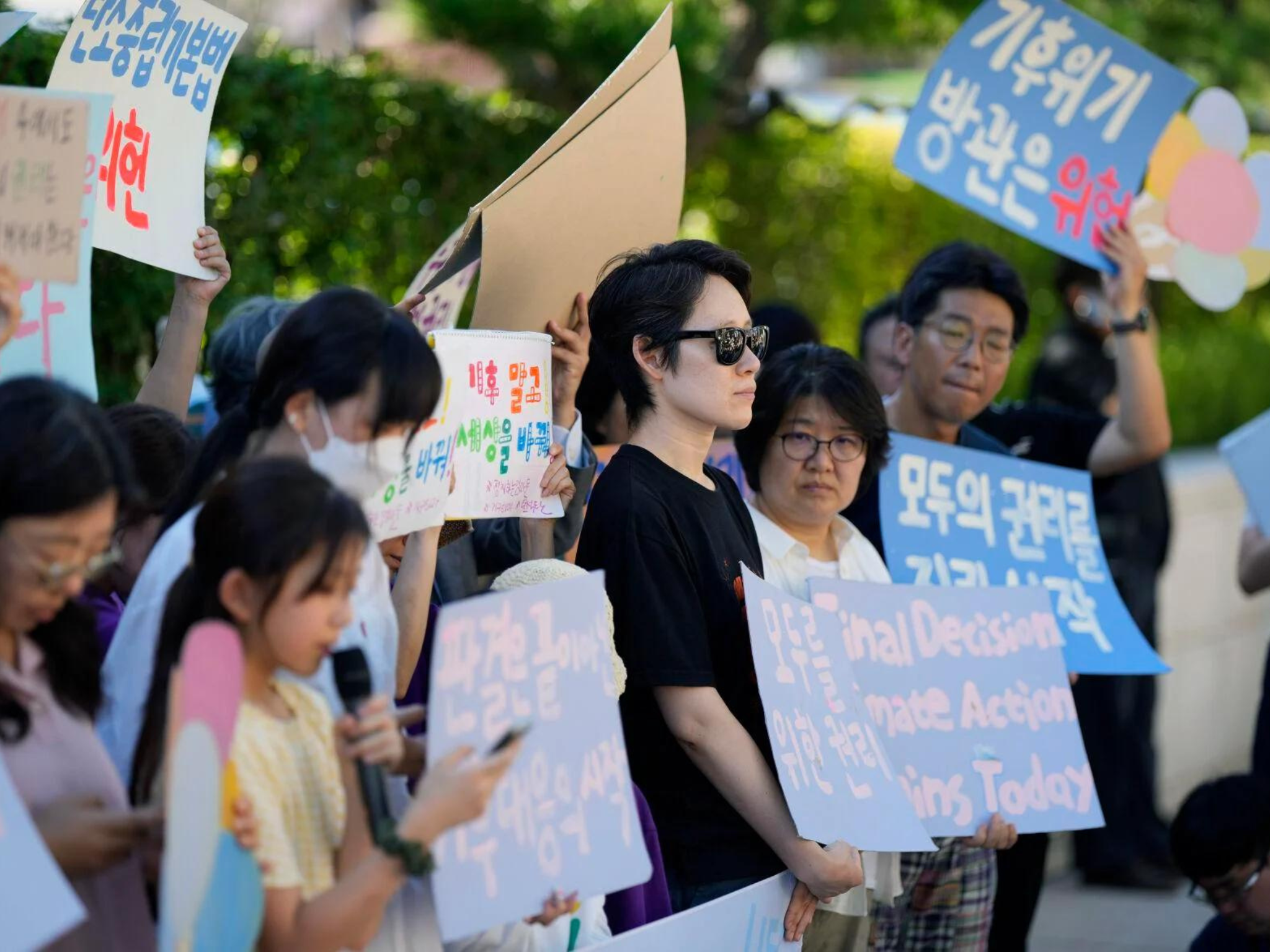
The constitutional court in South Korea has ruled that part of the country’s climate law does not conform with protecting the constitutional rights of future generations, an outcome local activists are calling a “landmark decision”.
According to reports, the unanimous verdict concludes four years of legal battles and sets a significant precedent for future climate-related legal actions in the region. Among other things, the court found that the absence of legally binding targets for greenhouse gas reductions for the period from 2031-49 violated the constitutional rights of future generations and failed to uphold the government’s duty to protect those rights.
The court said this lack of long-term targets shifted an excessive burden to the future. It gave the national assembly and government until 28 February 2026 to amend the law to include these longer-term targets.
The decision echoes a similar ruling by Germany’s federal constitutional court in 2021, which found the country’s climate law lacked sufficient provisions for emission reductions beyond 2030, potentially infringing on the freedoms of future generations.
Recall that South Korea’s climate litigation began in March 2020 when Youth 4 Climate Action, a group leading the Korean arm of the global school climate strike movement, filed the first lawsuit, alleging that the government’s inadequate greenhouse gas reduction targets violated citizens’ fundamental rights, particularly those of future generations. Subsequently, three additional lawsuits were consolidated, bringing the number of plaintiffs to 255.
Read also: US, others spend billions of public money on unproven ‘climate solutions’
These plaintiffs represented a wide age range, including children, babies, and even a foetus at the time of filing, emphasising the long-term impact of climate policy on future generations. Activists including Kim Seo-gyeong from Youth 4 Climate Action said they saw the court’s decision not as the end but as the beginning of a renewed push for more ambitious climate action.
“Responding to the climate crisis means reducing its risks, controlling factors that could exacerbate the crisis, and building safety nets to sustain life and society,” Kim said. “I look forward to seeing how this constitutional complaint will change the standards for climate response and what transformations it will bring.”
Jeah Han, a 12-year-old plaintiff who was part of the “baby climate litigation” consisting of young children and babies represented by their parents, expressed her feelings of joy.
“I have always believed that this complaint represented the wishes of many people. Today’s outcome feels like a wish has come true, and I am both happy and proud. Just as we have come together to fight for a better future amid the climate crisis, I hope more people will join us moving forward,” she said.
The court, however, rejected the plaintiffs’ claims that the government’s 2030 target to reduce greenhouse gas emissions by 40% from 2018 levels, as stipulated in the country’s carbon neutrality act, violated constitutional rights, saying this near-term goal was sufficient.
After the verdict, the plaintiffs said in a joint statement: “There is some disappointment regarding the parts that were not upheld today. However, it is clear that today’s ruling represents meaningful progress in protecting everyone’s rights beyond the climate crisis.
Story was adapted from the Guardian.
