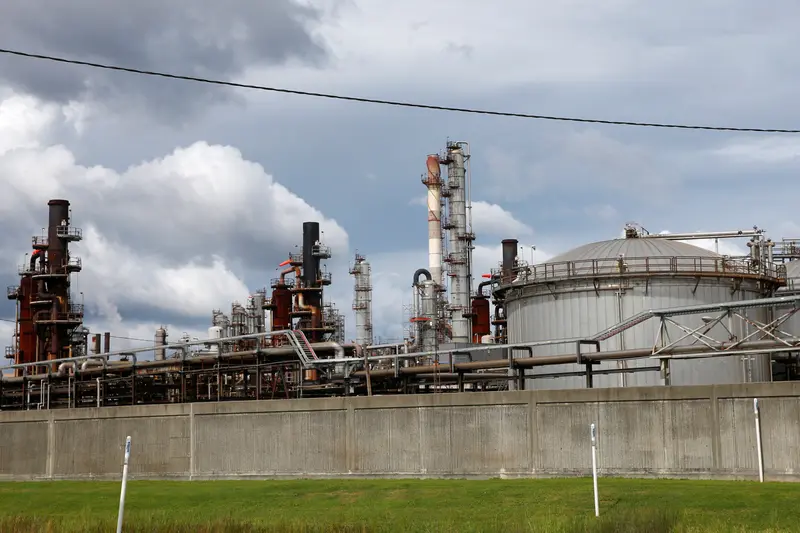
The US Environmental Protection Agency has announced that it plans to withdraw and reconsider its approval for Chevron to produce 18 plastic-based fuels, including some that an internal agency assessment found are highly likely to cause cancer.
In a recent court filing, the federal agency said that it “has substantial concerns” that the approval order “may have been made in error”. The EPA gave a Chevron refinery in Mississippi the green light to make the chemicals in 2022 under a “climate-friendly” initiative intended to boost alternatives to petroleum, as ProPublica and the Guardian reported last year.
An investigation by ProPublica and the Guardian had revealed that the EPA had calculated that one of the chemicals intended to serve as jet fuel was expected to cause cancer in one in four people exposed over their lifetime.
The risk from another of the plastic-based chemicals, an additive to marine fuel, was more than 1m times higher than the agency usually considers acceptable – so high that everyone exposed over a lifetime would be expected to develop cancer, according to a document obtained through a public records request.
The EPA had failed to note the sky-high cancer risk from the marine fuel additive in the agency’s document approving the chemicals’ production. When ProPublica asked why, the EPA said it had “inadvertently” omitted it.
Read also: Scientists criticise UN agency over failure to withdraw livestock emissions report
Although the law requires the agency to address unreasonable risks to health if it identifies them, the EPA’s approval document, known as a consent order, did not include instructions on how the company should mitigate the cancer risks or multiple other health threats posed by the chemicals other than requiring workers to wear gloves.
After ProPublica and the Guardian reported on Chevron’s plan to make the chemicals out of discarded plastic, a community group near the refinery in Pascagoula, Mississippi, sued the EPA in the US court of appealsfor the District of Columbia Circuit. The group, Cherokee Concerned Citizens, asked the court to invalidate the agency’s approval of the chemicals.
Over several months when ProPublica and the Guardian were asking questions about the plastic-based chemicals, the EPA defended its decision to permit Chevron to make them. But in the motion filed on 20 September, the agency said it would reconsider its previous position. In a declaration attached to the motion, Shari Barash, director of the EPA’s new chemicals division, explained the decision as based on “potential infirmities with the order”.
Barash also wrote that the agency had used conservative methods when assessing the chemicals that resulted in an overestimate of the risk they pose. The EPA’s motion said the agency wanted to reconsider its decision and “give further consideration to the limitations” of the risk assessment as well as the “alleged infirmities” identified by environmental groups.
Asked last week for an accurate estimate of the true risk posed by the chemicals, the EPA declined to respond, citing pending litigation. The EPA also did not respond when asked why it did not acknowledge that its approval may have been made in error during the months that ProPublica was asking about it.
Story was adapted from the Guardian.
