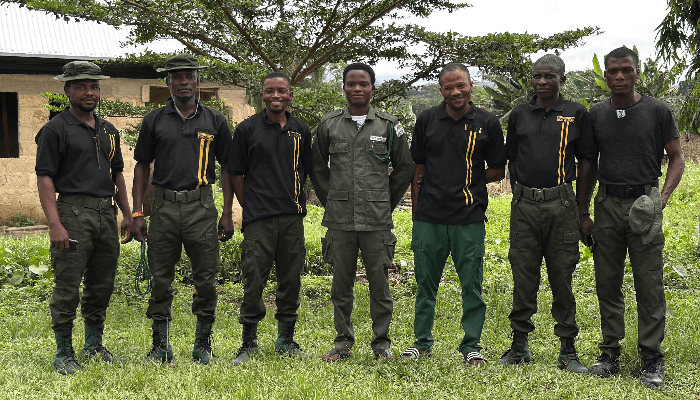
At dawn, Festus Olory steps into the forest he has spent half his life protecting. Dressed in a faded green uniform and armed only with a machete, he joins other volunteer rangers – the Ecoguards – on patrol through the muddy paths of the Ekuri rainforest in Cross River State. They listen for the whine of chainsaws, the crack of trees about to fall, or shouts of intruders.
Olory, 45, has done this work for 25 years without pay. “I am doing this to take care of my community,” he said. “I want to protect the forest. Like many of my colleagues who have children, I desire that my children someday see what we have spent our lives protecting.”
For the people of Old Ekuri and New Ekuri, two communities in Akamkpa Local Government Area, Cross River State, this 33,600-hectare forest is more than land. It is their history, their livelihood, and their legacy. But it is now under siege.
What began in 1992 as a community-led conservation success story – the Ekuri Initiative – is today a battle of survival. Once hailed by the United Nations and used as a model for sustainable forest management in Nigeria, the Ekuri forest is now threatened by illegal logging and poor governance. With limited government support, volunteer rangers like Olory and his team risk their lives to stop loggers from destroying one of West Africa’s last remaining rainforests.
For a country blessed with over 20 million hectares of forest cover, according to Global Forest Watch, community forest preservation is not often practised in Nigeria. But the people of Ekuri saw it for what it really is: preserving a whole ecosystem and all the gems in it, because it is the responsible thing to do.
In 1992, elders in Ekuri came together to conserve one of Nigeria’s last rainforests.
They committed to keeping 33,600 hectares of forest intact, out of sheer conviction that allowing the forest to die from mindless exploitation is tantamount to squandering the communities’ future. The elders knew that their forest, which shares a boundary with the Cross River National Park, remains one of the last homes of gorillas in Nigeria. And they were determined to protect it.
It is also a habitat for several varieties of Nigerian indigenous species, like timber, afang leaf, kola nut, bitter kola, and bush mango, all of which are being threatened by unsustainable logging, hunting, and farming.
In recognition of Ekuri’s conservative contribution and exemplary model, it was awarded the United Nations Equator Initiative Award in 2004 and later became a pilot site for the United Nations Reducing Emissions from Deforestation and Forest Degradation programme (REDD+) for maintaining its forest.
For several years, things looked promising; Non-Governmental Organisation (NGOs) like the Nigerian Conservative Foundation (NCF) showed interest in the forest.
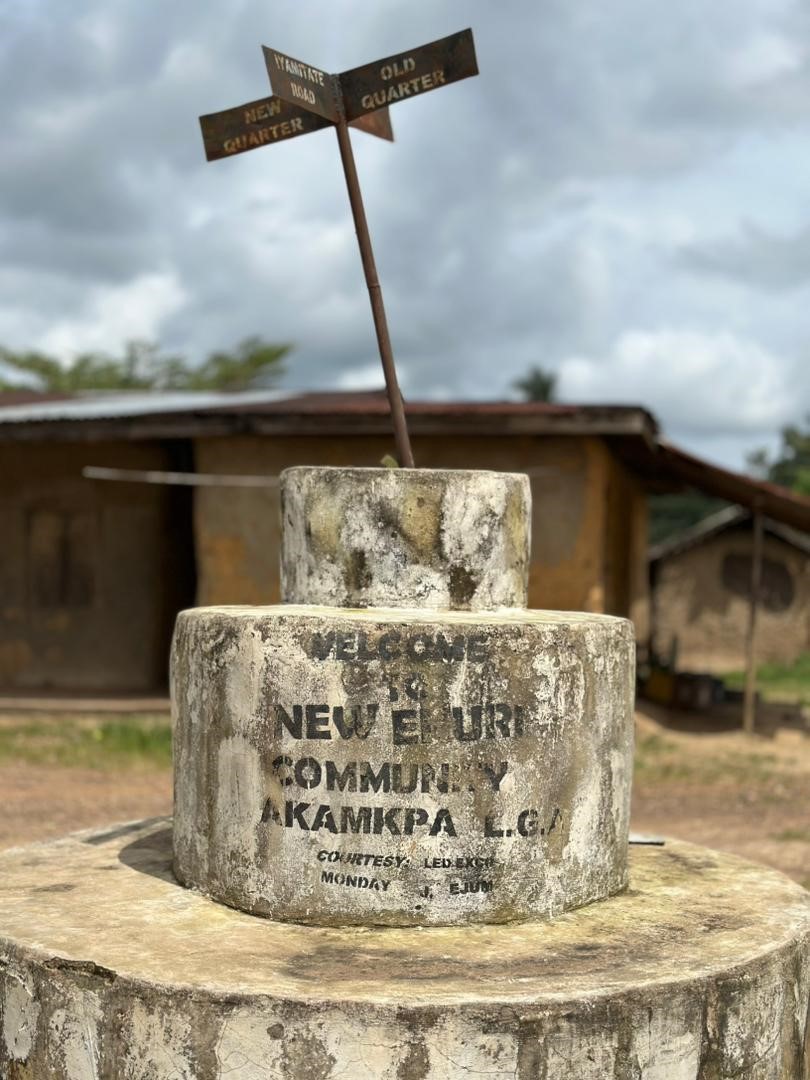
Akampa Local Government
They made funds available for the forest, which is surrounded by trees and shrubs arranged intricately. Service of voluntary rangers known as Ecoguards was recruited, illegal loggers were kept at bay, and the forest thrived.
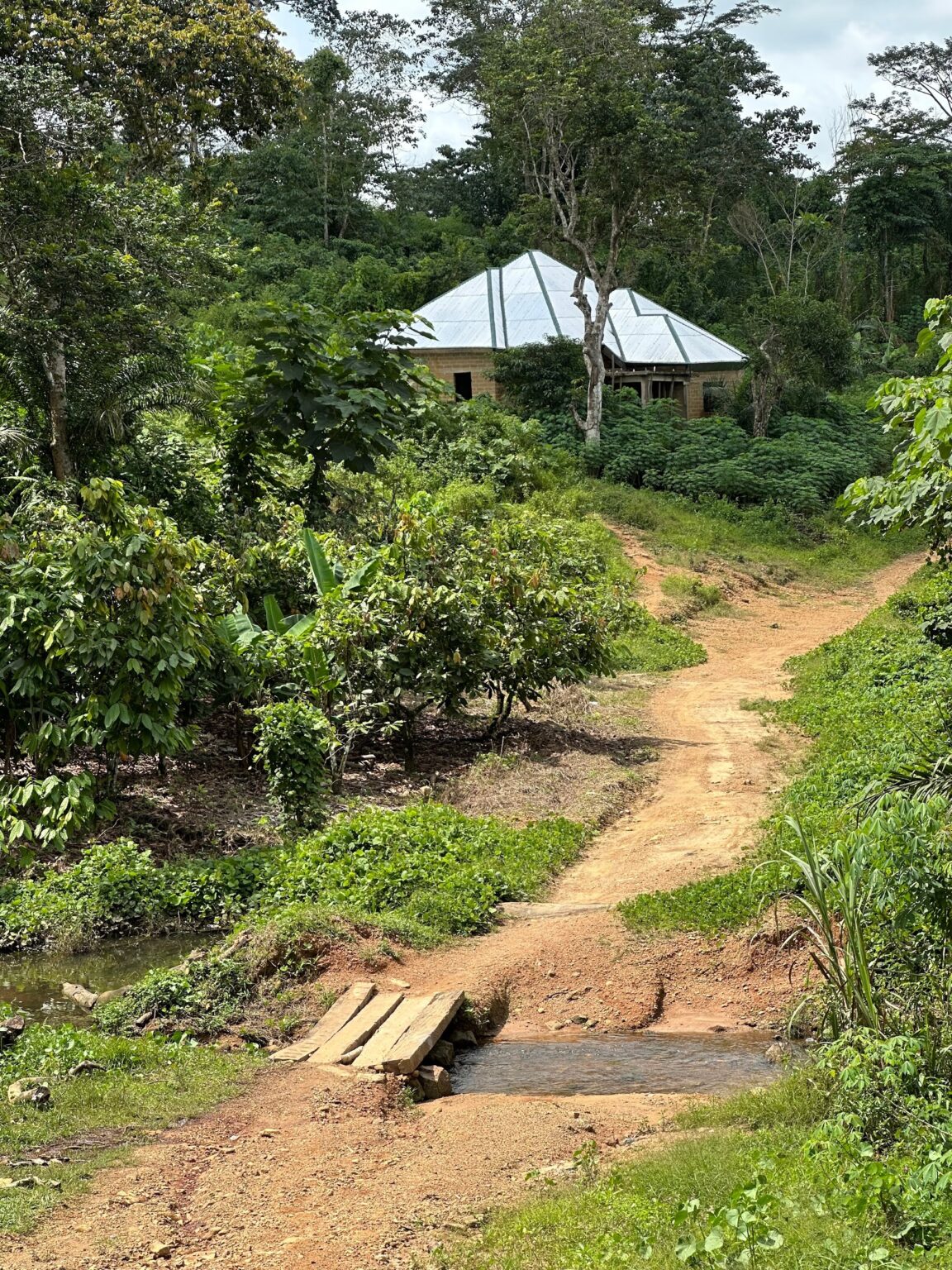
Road leading into Ekuri Forest
Sparkling streams line up different parts of the forest, causing the air to give off a fresh fragrance. Its beauty can be described as soft and breathtaking.
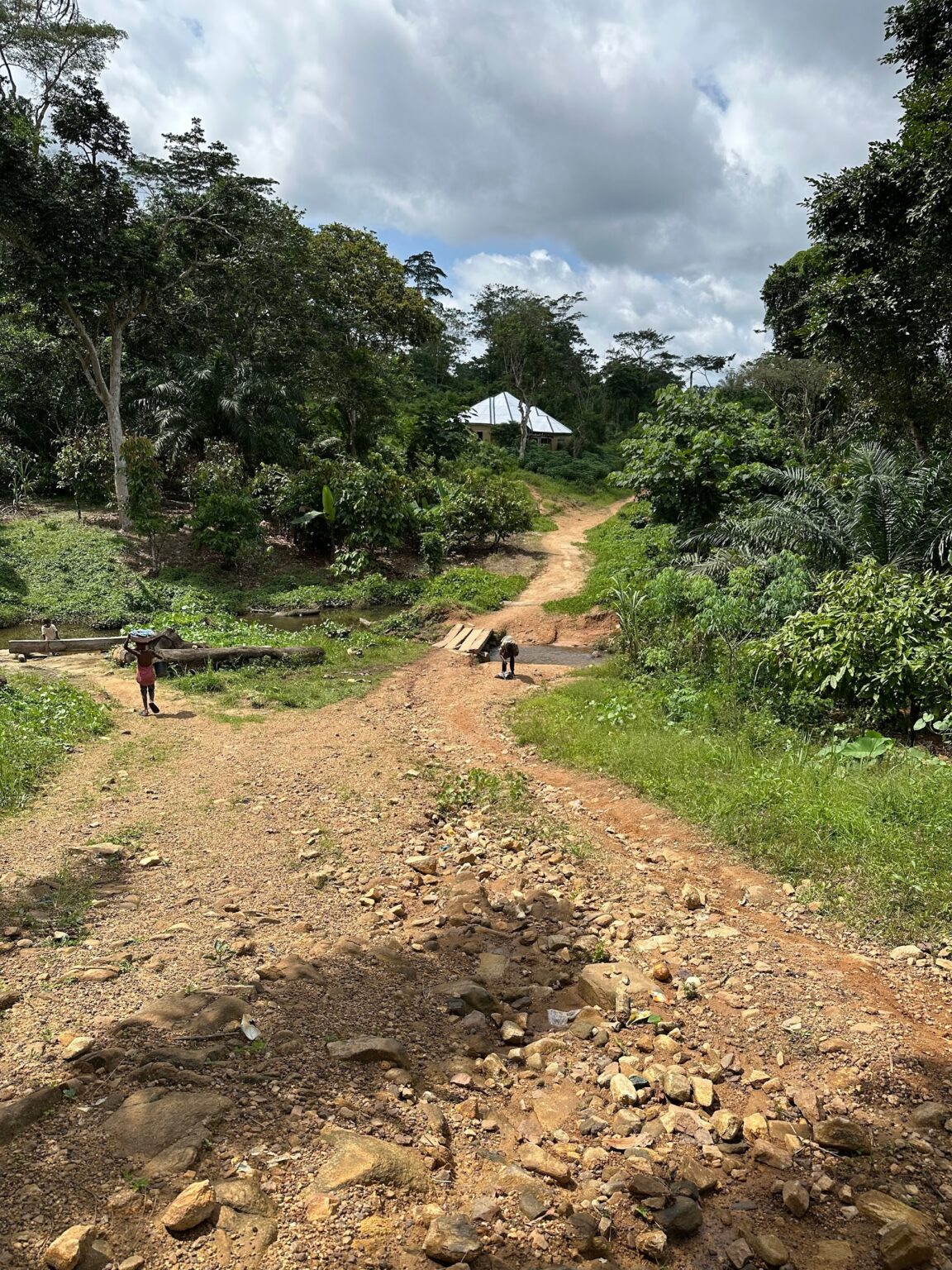
Unmotorable road leading into Ekuri Forest
However, 33 years later, so much has changed. The forest is debilitated. Large trucks have now left deep tracks on the muddy roads that lead to the forest as illegal logging digs its claws into the preserved forest timbers. The duties of the voluntary Ecoguards have expanded without any incentive.
The road leading into the Ekuri forest is now completely unmotorable. Only a bike can navigate through it. Chopped timber trees sit forgotten with no plans for replanting.
It first began in 2016, when the then-government of Cross River announced plans to build a six-lane, 260-kilometre superhighway that would link a port in the capital city of Calabar to neighbouring Benue State in the North-Central region of Nigeria.
This $3.5 billion project was to cut through some protected parts of the Ekuri forest and the National Park.
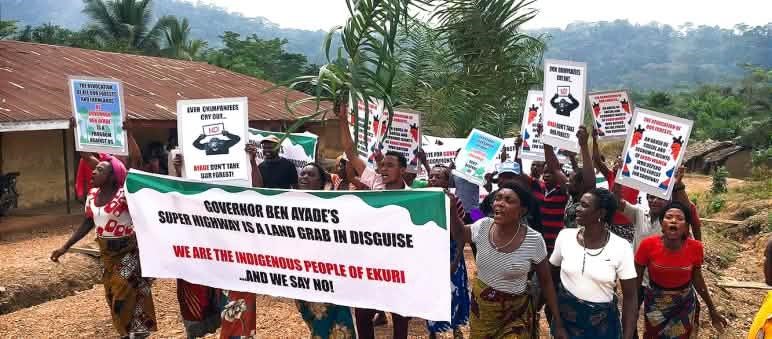
Members of the Ekuri protesting against the superhighway project
But the locals protested. Their protest, backed by international support from NGOs like the Wildlife Conservation Society, caused a short respite, even though some significant parts of the forest had already been destroyed.
Things took a more downward turn in the years that followed. Several unauthorised logging companies sneaked into the forest to cut down timber.
Ezemac International Company Limited, a Nigerian logging company, has been accused severally by the Ekuri people of logging timbers in large quantities from the forest without the approval of the Ekuri elders.
Ezenwa Igwe, Chief Executive Officer of Ezemac International Nigeria Limited, claimed that the state government and the Forestry Commission were aware of his logging activities because of an existing agreement.
But Ekuri elders have refuted his claim, noting that partnering with the government without their permission is stealing.
“There’s only so much we can do by ourselves. This is why we need the support of the government,” said Abel Egbe, clan head of New Ekuri, in an interview with this reporter.
The global timber market is valued at $58.96 billion (N84.67 trillion at N1,436 per $), fueling investors’ thirst to tap into its gains. A key raw material in the construction industry, furniture making, and charcoal production, and is highly sought after across the world.
Egbe says conservation is a culture for any person from the Ekuri community. It is that culture that has over 20 young men giving their time, resources, and lives in the forefront of the community’s fight against illegal loggers without any form of remuneration, except occasional stipends from village elders and NGOs.
“The reason we are doing all we can to protect the forest is because we want our children and generations after them to see this forest. We want them to know that conservation is possible. Protecting what God gave us is important,” Egbe added, hope laced in his every word.
Hope appears to be the only thing that is keeping the flame of their conservatism alive.
Rangers at the forefront of the fight
From the moment they turn into young men, Ekuri boys are recruited into the Ecoguard squad, where they offer voluntary service in addition to their daily job, which is mainly farming of different crops like cocoa, vegetables, and plantain.
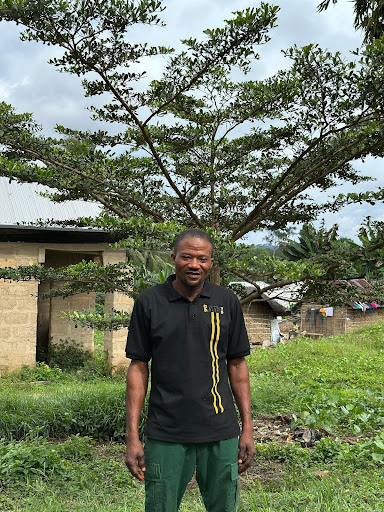
Festus Olory, member of the Ecoguard
When Olory joined the Ecoguards, it was borne out of love for his people, their shared passion for protecting the Ekuri forest, and his desire to give back to a community that had helped raise him.
That decision that began when he was 20 years old has cost him many sleepless nights spent keeping watch inside the most protected parts of the forest that are often targeted by loggers who sneak in from neighbouring communities.
He has had to settle quarrels with his wife, who sometimes does not understand why he risks his life for what does not bring his family money.
But Olory believes that one day his labour will be worth it. “I have hope that I’ll get rewards for my work someday, as more people take an interest in what we are doing, I believe the story will change for us,” he said.
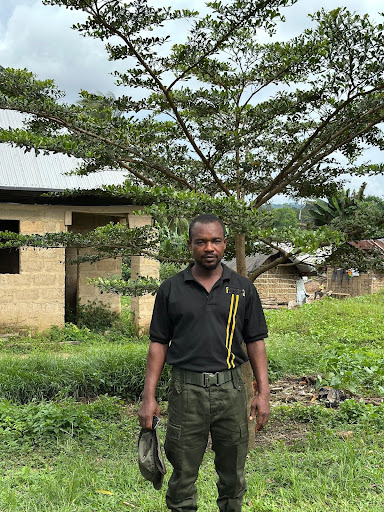
Friday Ettah, member of the Ecoguard
For Friday Ettah, a 41-year-old Ecoguard who has spent more than 25 years with the ranger squad, it is the beauty of the forest that keeps him committed to protecting it, even though the work comes with no financial compensation.
Ettah, who is also a cocoa and plantain farmer, adds that he sees his involvement in the Ecoguard as a form of giving back to a community that has contributed to his farming journey.
“Protecting the forest is a form of giving back to the community. I’m able to be a cocoa farmer because of the kindness of the village that gave me land. So what I do in the Ecoguard is a form of community service,” he said.
These rangers walk long distances inside the forest to ensure that it is safe from poachers.
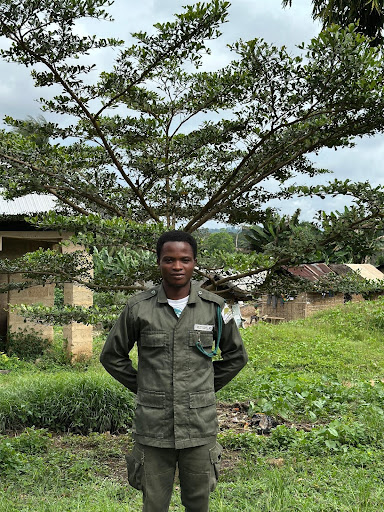
Joseph Okey, member of the Ecoguard
“We trek for long hours inside the forest. Sometimes we stay inside it for days without food. If only we had motorbikes and some form of communication gadgets to ease our interaction,” said Joseph Okey, a 28-year-old Ecoguard, as he showed off a small machete in his hand.
The machete is the rangers’ only form of protection against poachers who enter the forest with better weapons.
The journey has not been easy, he says. “Sometimes we contribute money amongst ourselves just so we can have something to eat while on our patrol duty.”
Their lack of better arms holds them back in the face of threats from youths of neighbouring communities and in some cases construction companies, who enter the forest heavily armed to steal timber.
“Because we are not well armed, we try to be careful when dealing with poachers. We usually approach them with caution.”
Globally, efforts to protect biodiversity are met with mixed reception, a lack of knowledge, and poor funding. In Nigeria, the reception is abysmal as not many people understand the concept of conservation.
Stella Egbe, a senior conservation manager at the Nigerian Conservation Foundation, said conservative efforts are often seen in terms of quick returns, so “people are mostly not compelled to fund it”.
According to the World Bank, Indigenous peoples like the Ekuri community, who belong to the indigenous Nkokoli tribe, represent about six per cent of the global population. They are crucial stakeholders and rights holders in the conservation and sustainable management of biodiversity.
They also manage over 38 million square kilometres of land globally, which includes nearly 40 percent of all protected areas.
A recent report from Global Witness, an international NGO involved with natural resource exploitation investigations, highlighted a staggering 146 cases of homicides and kidnappings in 2024 alone, an average of three people killed or disappeared each week.
Many of these incidents targeted individuals defending their lands against extractive industries such as logging and mining, with one-third of the victims being Indigenous peoples.
An NGO’s resilience back rangers fight
Martins Egot, executive director of Panacea for Developmental and Infrastructural Challenges for Africa (PADIC-Africa), an NGO that oversees the affairs of the Ekuri forest, said the government has turned a blind eye to the efforts of the community, and this is taking a huge toll on them.
“It’s a very terrible situation that we find ourselves here. We are struggling between people who are in support of conservation and those who want to make immediate gains for themselves and their families,” he said in a telephone interview.
Egot, who is also the head of the Ecoguard squad, says he is forced to use personal funds for the welfare of the rangers. “It cost us millions to keep the Ecoguards working. It costs money to get them uniform kits, equipment, and meet their daily needs, especially when they have to spend days inside the forest.”
Although he revealed that they sometimes receive funding support from other NGOs, it is still not enough.
“I dream that something good can happen for them because they still need more training on surveillance and patrol,” he said.
Egot’s NGO has also actively engaged in capacity-building exercises. This has included providing training to community development groups and community-based enterprises, conducting research to better understand the challenges facing the Ekuri community, and offering community leadership training.
A state blessed by resources, divided by weak policies
Over 60 percent of Cross River is covered by natural forest, making it the only Nigerian state with so much forest cover. It is also one of the 25 biodiversity hotspots in the world. Despite this, weak policies around illegal deforestation are stripping its forest cover.
There are no strict measures around forest preservation in Nigeria, which allows for unauthorised encroachment of conservation sites. Several policies by different governors have been declared over the years, but they are not effective enough to bring defaulters to a halt.
For instance, according to the Cross River State Forestry Law and Regulations Act 2011, any illegally sawn wood across the state is considered an offence and will be seized. Also, all registration of forestry-related activities, such as timber and non-timber permits and farmers’ access into forest reserves, are to be reported to the Cross River State Forestry Commission for compliance.
Despite these laid down regulations, between 2001 and 2024, the state has lost an average of 83 percent of its forests to illegal deforestation, data from Global Forest Watch shows.
Data from Cross River State’s 2025 budget shows that N1.60 billion was allocated to the Forestry Commission in 2025, more than threefold higher than the N465.96 million allocated in 2024.
However, “Ekuri has never received any form of government support,” said Louis Agbor, a board member of the Ekuri Initiative, raising questions about budgetary utilisation.
Attempts to contact the Cross River Forestry Commission through its website were not successful during the time of this investigation. Also, attempts to reach the Cross River Ministry of Environment through social media messaging received no response.
An untapped opportunity awaits
In 2024, tourism accounted for 10 percent of the global economy, contributing $10.9 trillion to global gross domestic product (GDP) in the period.
The sector supports 357 million jobs worldwide, approximately one in every 10 jobs, highlighting its central role in the labour market.
With better financing and acknowledgement of Ekuri’s conservative efforts, the forest has the potential to become like the Lekki Conservation in Lagos, create jobs, and boost Cross River and Nigeria’s tourism economy.
And according to the World Bank, tourism can expand markets for existing and new services that directly affect poor and isolated communities.
Although there is no forthcoming help in sight, the men in the Ekuri rangers squad hold on to hope that someday their conservation efforts will be rewarded. They possess passion and grit for a job that tugs almost aggressively at the helm of their pockets and family relationships.
This story was produced as part of Dataphyte Foundation’s Biodiversity Media Initiative project, with support from Internews’ Earth Journalism Network.
