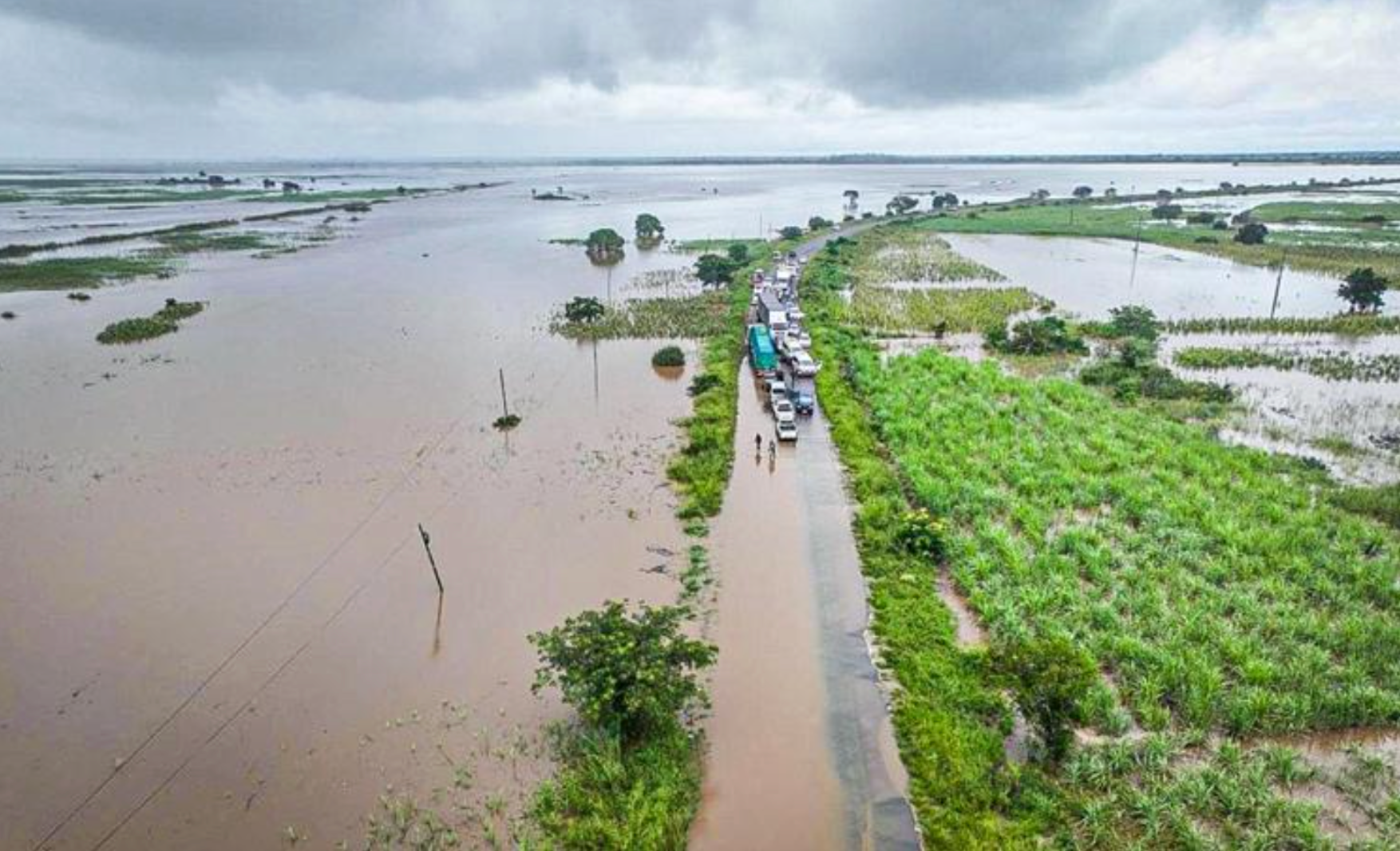
A new study undertaken by World Weather Attribution (WWA), an international consortium of scientists and institutions that investigates the role of human-caused climate change in extreme weather events, has found that a warming climate, combined with La Niña weather patterns, aggravated the extreme rains.
“The most striking finding was that the rainfall accumulated over just 10 days exceeded the region’s average annual rainfall. This was unprecedented,” one of the study’s lead authors, Izidine Pinto, climatologist and researcher for weather and climate models at the Royal Netherlands Meteorological Institute, told Mongabay. He added that some weather stations recorded more than 200 millimeters (8 inches) of rain in just 24 hours.
The authors of the study noted that structural vulnerabilities in the affected areas made the climatic shocks even deadlier and more destructive. Mozambique, in particular, Pinto said, was not prepared for such heavy rainfall.
The WWA scientists analyzed 10-day maximum rainfall accumulations during the rainy season in Mozambique, South Africa, Eswatini (formerly known as Swaziland) and Zimbabwe from December to the beginning of February. By combining this data with climate models, the authors found that these countries are witnessing more frequent bouts of consecutive rainy days, and that rainfall events are becoming more intense.
The current rainy season has been influenced by La Niña events, an unusual cooling of the waters of the tropical Pacific Ocean that rolls around every three to five years and influences weather patterns worldwide. In Southern Africa, La Niña is linked with heavy precipitation. Under La Niña conditions, the likelihood of an extreme 10-day rainfall event increases fivefold. Rainfall intensity also increases by about 20%.
With a change in underlying climatic conditions, that increase in intensity is now at 40%.
Read also: Study shows existing insurance system falls short against rising climate change risks
“Natural climate variability such as La Niña still influences wet years, but climate change is making the wet years significantly wetter and more damaging than they would have been decades ago,” Pinto said.
The WWA study found that impacts from these climatic disasters are amplified because of the disproportionate effects on poor and marginalized communities. “Poor housing quality and inadequate infrastructure significantly increased exposure and vulnerability to flooding,” the authors said.
The floods damaged health facilities, destroyed medicine stocks, and cut off people’s access to health care centers, disrupting life-sustaining care.
What’s eroding people’s ability to respond and recover is that they face not just one extreme weather event in isolation, but a series of them, according to experts like Richard Munang at the United Nations Environment Programme (UNEP).
“Here is what rarely enters this conversation: these same communities were still recovering from the severe 2023/2024 drought,” Munang, UNEP’s head of global environment monitoring systems, told Mongabay by email. “Crops had failed, savings were depleted, and health services were already stretched. Before they could stand up from the drought, the flood knocked them down again.”
Munang added that these are not two separate disasters, but part of the same cycle: “Drought, followed by flood, followed by a disease outbreak.”
The WWA study revealed that communities affected by the rains have limited capacity to cope with the floods, which can increase the risk of disease outbreaks.
Story was adapted from Mongabay.
