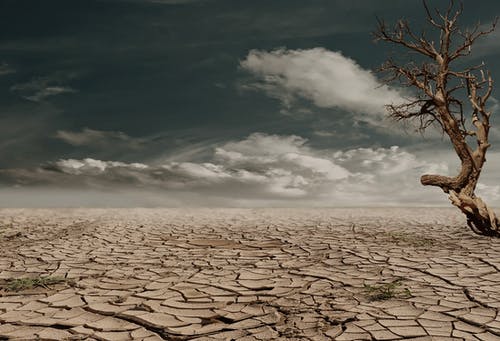
A 2022 Global Food Policy Report prepared by the International Food Policy Research Institute (IFPRI) has shown that climate change will put about 14.8 million people at risk of hunger by 2030.
The report showed that the number of victims of hunger would be 11.3 million in 2030 if there was no impact of climate change. It found that over 750 million people in South Asia have so far been affected by floods, droughts, and climatic hazards caused by climate change.
“In Bangladesh, near-term projections estimate a reduction of up to 17 per cent in total calorie consumption by 2030 due to climate change,” it found.
Read also: Auckland councillors agree to cut transport emissions by 64%
It further found that an unprecedented suite of climatic changes has caused crop yield declines and production losses in the region. While the average temperature rise was 0.7 degrees Celsius between 1901 and 2018, a more significant increase was observed over the Himalayas (1.3 degrees Celsius).
The report found that while subsistence fisheries in India and Bangladesh provide up to 60 per cent of animal protein in people’s diets, increasing salinity intrusions in inland aquaculture ponds have resulted in fish mortalities.
In Bangladesh for instance, the report found that average annual temperatures have increased in the last six decades, with warming accelerating from 2001 onward and a decline in precipitation of about 84mm per decade was observed from 1981 to 2010.
Extreme precipitation events will be 1.7 times more likely in Bangladesh by 2050 than they are now, read the report presented by Aditi Mukherji, the principal researcher at the International Water Management Institute.
The IFPRI report, which was based on the analysis of different studies, showed that the use of urea, a major emitter of nitrous oxide, is heavily subsidised across South Asia, especially in irrigated areas, resulting in its widespread overuse.
In his reaction, the director of IFPRl’s Environment and Production Technology Division, Channing Arndt said that the global emissions from the agriculture and food sectors would pose a big challenge over the next 30 years and countries need to address it.
Story was adapted from Asia News Network.
