Top Posts
𝗨𝗗𝗨𝗦 𝗔𝗹𝘂𝗺𝗻𝘂𝘀 𝗪𝗶𝗻𝘀 𝗡𝗶𝗬𝗔 𝗚𝗿𝗮𝗻𝘁 F𝗼𝗿 𝗖𝗹𝗶𝗺𝗮𝘁𝗲-𝗧𝗲𝗰𝗵 𝗜𝗻𝗻𝗼𝘃𝗮𝘁𝗶𝗼𝗻
UNEP recognizes pacific students for securing ICJ AO...
Nigerian government restates commitment to address climate change
UN renews drive to strengthen NAZCA portal for...
How Volunteer Community Rangers Lead the Fight for...
How the Military’s Counter-insurgency and Flooding Endanger African...
Endangered Donkeys of Sokoto: Exploring the Hidden Drivers...
Fortune Charms Craze Threatens Vulture Population in Kano
Illegal Farming and Logging Drive Human–Elephant Conflict in...
Okomu National Park: Inside Nigeria’s Bold Community-Conservation Experiment
EcoNai Newsroom
  • Newsround
  • Nigeria
  • Africa
  • World
Africa

Study highlights cities’ ability to absorb rainfall, prevent floods in Africa

by Matthew Eloyi March 3, 2023
written by Matthew Eloyi March 3, 2023
869

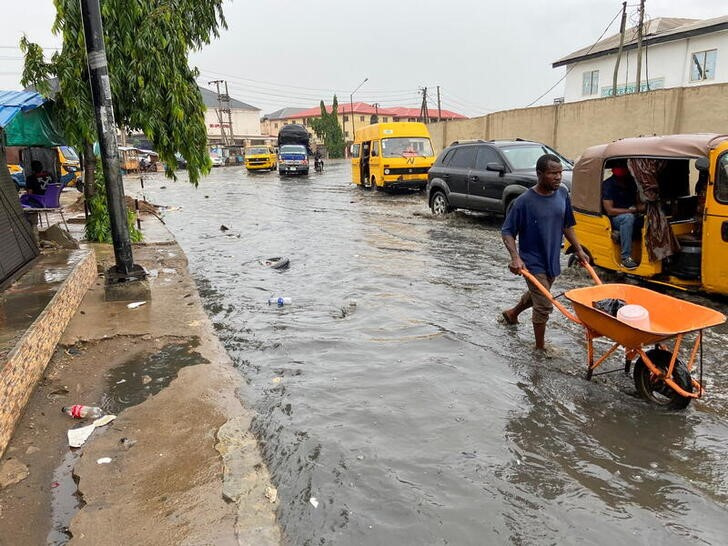
A new study has highlighted the “sponginess” or the inherent capacity to absorb significant amounts of rainfall in five major cities across Africa.

According to the study, Kigali (Rwanda) is 43% spongy, while Durban (South Africa) is 40% spongy, with Lagos – Nigeria (39%), Nairobi – Kenya (34%), and Cairo (Egypt) at 20% bringing up the rear.

According to the study’s authors, green and blue infrastructure, such as gardens, parks, ponds, rivers, and lakes, offers the potential to manage climate-related high rains and avert flooding.

Read Also: Commonwealth Secretary-General calls for collaborative action on climate change

According to the study, which was completed by Arup, green and blue infrastructure is not only significantly more cost-efficient than engineered alternatives while also adding 28% more value than engineered alternatives, but it is also very good at preventing floods.

Arup used machine learning and artificial intelligence to accurately measure green, blue, and grey (concrete) infrastructure, and consequently calculate how much rainwater these cities can absorb during heavy rainfall.

The term “Sponge City” was first used in 2013 by Professor Kongjian Yu, a fervent proponent of ecological urbanism and the founder of Peking University, to describe cities that work in harmony with nature to absorb rainwater rather than relying on grey infrastructure like concrete, pipes, and pumps to redirect it.

Stoy was adapted from Enviro News

Floodsrainfall
0 comment 0 FacebookTwitterPinterestEmail
admineconai

previous post
Commonwealth Secretary-General calls for collaborative action on climate change
next post
Canada publishes roadmap for green investments despite complaints of industry capture

Related Posts

WB report seeks stronger climate adaptation to safeguard...

December 6, 2025

AFDB strengthens investments in climate-peace-security nexus

November 28, 2025

Ethiopia to be officially named host of 2027...

November 18, 2025

ADF grants $9 million to strengthen climate resilience...

November 15, 2025

Ethiopia expresses readiness to host COP32

November 15, 2025

African climate change projects secure major funding

October 22, 2025

Report: A fifth of migratory species face extinction...

October 7, 2025

Stakeholders seek integration of climate change into national...

October 7, 2025

At the 2nd Climate summit Africa mobilizes for...

September 19, 2025

AfDB sets aside $40m to drive AGIA green...

August 18, 2025

Leave a Comment Cancel Reply

Save my name, email, and website in this browser for the next time I comment.

Newsletter

Subscribe my Newsletter for new blog posts, tips & new photos. Let's stay updated!

  • Facebook
  • Twitter
  • Instagram
  • Linkedin
  • Bloglovin
  • Vimeo

@2021 - All Right Reserved. Designed and Developed by Eco-Nai+

EcoNai Newsroom
  • Newsround
  • Nigeria
  • Africa
  • World