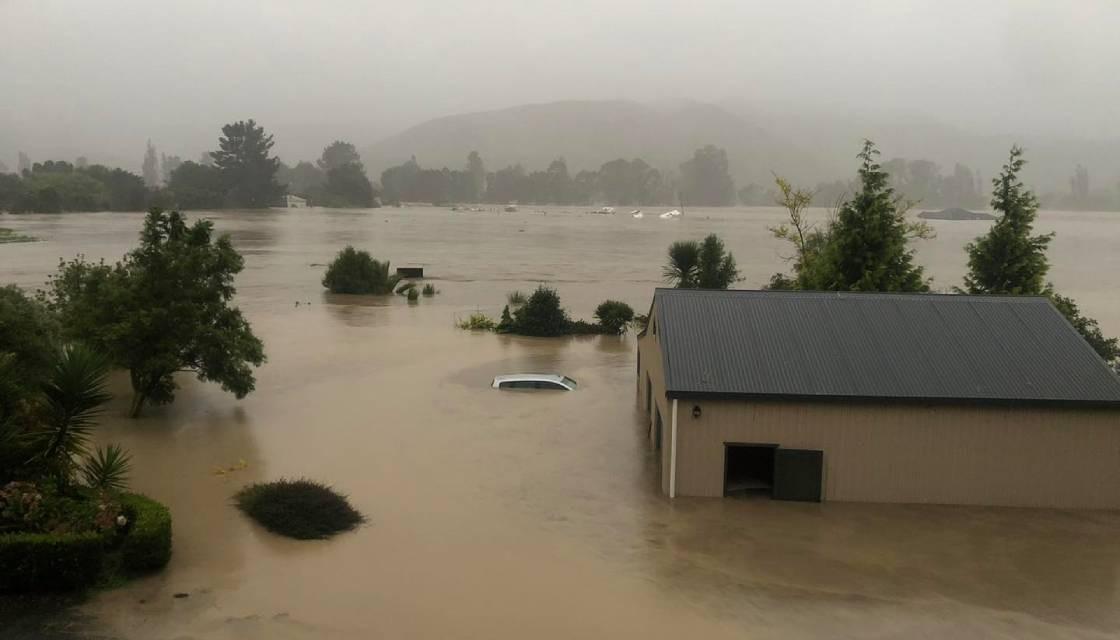
A new research by the World Weather Attribution (WWA) has said the heavy rainfall events that flooded northeast New Zealand following Cyclone Gabrielle, might have ‘likely’ been worsened by climate crisis.
Cyclone Gabrielle caused extreme rain that fell over two days in February and resulted in extensive damage that cost billions of dollars in economic losses in New Zealand, making it one of the deadliest and costliest cyclones to hit the region on record.
This new research released on Tuesday says with extreme rainfall events now dropping 30 per cent more rain than before, it means that such heavy rainfall events have now become four times more common in the region.
Conducted by an international team of climate scientists, the study finds that the increase in extreme rainfall is “likely” due to climate crisis, albeit the precise influence of the human-induced global warming is yet to be quantified.
The report, by using historical weather station data, suggests that the two-day maximum rainfall over the region is now about 30 per cent more severe with the influence of human greenhouse gas emissions and such heavy rainfall events also now happen about four times more often than they did previously.
The report acknowledges large uncertainties in these estimates due to the short period covered by the data and high variability in the region and does not conclusively say climate crisis is the major factor behind the flooding, but it warns that reducing the exposure and vulnerability of communities to future flooding requires urgent action as heavier rainfall is becoming more likely as the planet continues to warm.
Read also: EU lawmakers okay deals on CO2-cutting targets and expanding forest carbon sinks
The study was conducted by 23 researchers from universities and meteorological agencies in Aotearoa New Zealand, France, Germany, the Netherlands, the United Kingdom, and the US.
“A rapid assessment of the role of climate change in this flood event is a first for Aotearoa New Zealand, and tries to address one of the questions being regularly raised about whether this summer is the country’s new reality,” said Sam Dean, principal scientist at the National Institute of Water and Atmospheric Research and one of the scientists who worked on this study.
The report also notes that, for a climate 2C warmer than in preindustrial times, models suggest that rainfall intensity will slightly increase, although uncertainty remains large.
The scientists involved in the study suggest that future efforts to reduce vulnerability should update infrastructure to be built for the future climate, improve impact forecasting, and strengthen social connectedness, knowledge, skills, and awareness of natural hazards to increase resilience of communities.
Story was adapted from the Independent.
