Latest reports suggest that African countries are quickly moving their circular economy vision from words to delivery.
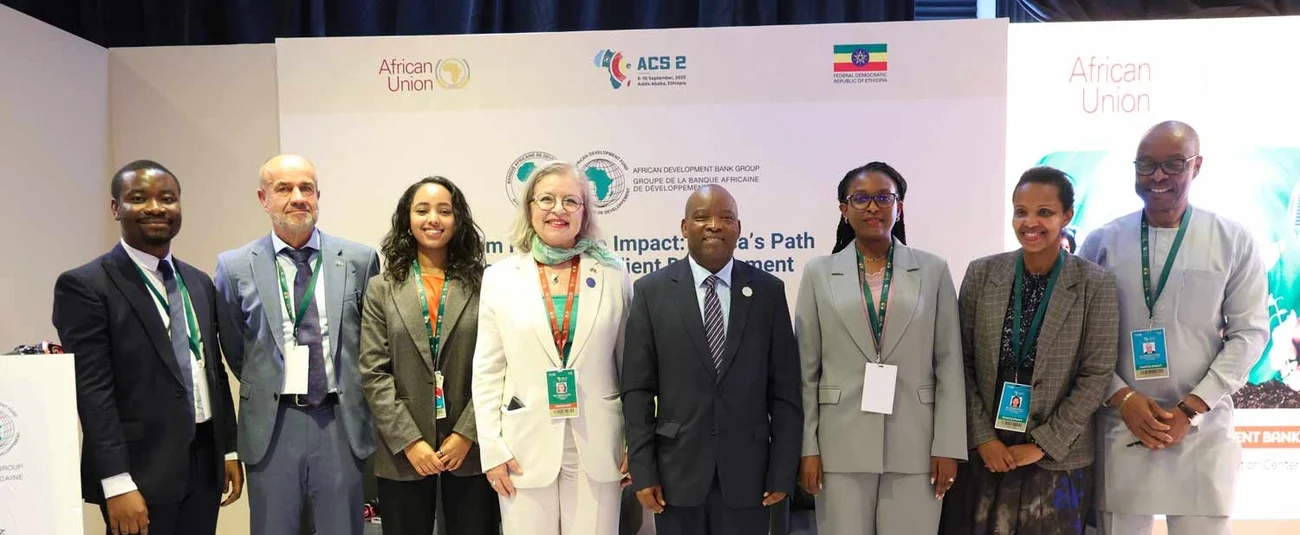
At the 2nd Africa Climate Summit (ACS2), a pan-African dialogue took place recently on the sidelines of the Africa Climate Summit in Addis Ababa, the first since the African Union adopted its Continental Circular Economy Action Plan (CCEAP) in July 2025.
The session, “Delivering Africa’s Circular Economy Agenda: From Roadmaps to Continental Action,” brought together government officials, entrepreneurs, and development partners to chart practical steps for scaling circular economy initiatives across the continent. It was hosted by the African Development Bank’s Africa Circular Economy Facility (ACEF), the United Nations Development Programme (UNDP), and the African Circular Economy Alliance (ACEA). ACEF provides catalytic finance for circular economy initiatives, while ACEA, hosted by the AfDB, serves as a continental platform for governments to align reforms and drive joint projects.
In his remarks, African Union Commissioner Moses Vilakati described the AU’s Action Plan as “a stage for a green, inclusive and resilient future, and a chance for Africa to lead the global circular economy while tackling climate change head-on.” The potential benefits of such a transformation are substantial: it could unlock $546 billion in market opportunities and create 11 million jobs by 2030.
Dr. Anthony Nyong, Director for Climate Change and Green Growth at the African Development Bank, outlined the solution: “Africa has the vision, through the AU’s Action Plan. It has the national roadmaps that translate this vision into practical steps. And it has the platforms — through ACEA and ACEF — that can connect these efforts and mobilize the resources required to scale them.”
Dr. Matthias Naab, Director of UNDP’s Regional Service Centre for Africa, said: “Africa’s journey toward a circular economy is no longer a distant vision; it is happening now. The Continental Circular Economy Action Plan is our shared blueprint for transformation, rooted in the realities of our nations and the aspirations of our people. Its success depends on bold partnerships, local innovation, and the leadership of our youth and women. Together, we can create an inclusive economy built on resource circularity, to advance an African-led sustainable development, in Africa.”
The discussion sought to link Africa’s climate agenda with industrial strategy, positioning climate action as a driver of competitiveness, regional trade and sovereignty rather than merely an environmental issue.
UNEP’s Dr. Margaret Oduk reinforced this strategic shift: “Circular solutions can reset Africa’s economy, accelerate a greener recovery, and make sustainability the baseline of development, not an afterthought.”
Finland’s Ambassador Sinikka Antila, representing a key donor to the ACEF, shared how her country’s pioneering national circular economy roadmap rewired industries and reshaped markets. “We’ve seen how circularity can drive systemic change,” Antila said. “And Africa holds advantages: scale, youth, and the urgency to leap ahead.”
In Rwanda, the Cleaner Production and Climate Innovation Centre supports entrepreneurs turning discarded plastics into eco-bricks strong enough to build classrooms. In Ethiopia, the Environmental Protection Authority is embedding circularity into new industrial regulations.
Story was adapted from AFDB.
