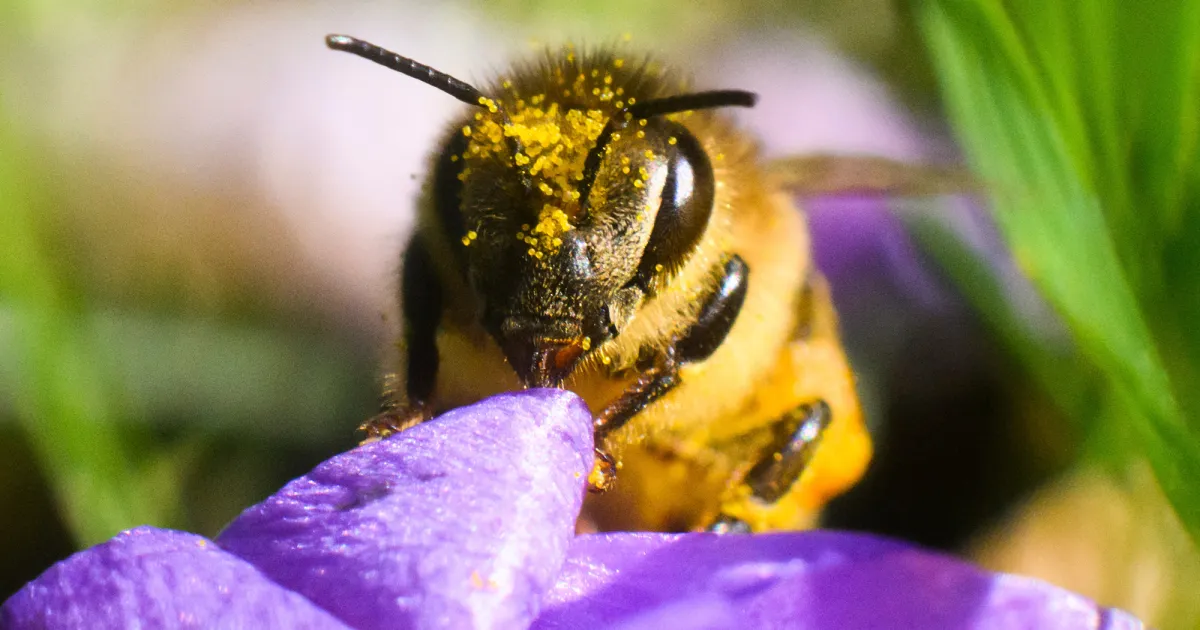
Business leaders have asked the UK government to stop ignoring the science and block a bee-killing pesticide from being used.
The neonicotinoid pesticide Cruiser SB is used on sugar beet and is highly toxic to bees. Although it is banned in the EU, the UK has provisionally agreed to its emergency use every year since leaving the bloc. In 2017, the then environment secretary, Michael Gove, promised to use Brexit to ban all neonicotinoids.
Recall that in September, government scientific advisers said that they were not able to support an authorisation for Cruiser SB, because the “potential adverse effects to honeybees and other pollinators outweigh the likely benefits”.
Now a group of businesses that depend on pollinators, including some farmers and those who use botanicals in their products, have said the government must heed their advice and not allow bee-killing pesticides to be used.
In a letter to Mark Spencer, the farming minister, Anabel Kindersley, the chief executive of Neal’s Yard Remedies, Tim Mead, the head of Yeo Valley, as well as the boards of Lush and the Body Shop have asked him to block Cruiser SB from use.
Read also: Youth-led group launches manifesto on climate crisis in Nigeria
“We need to listen to the scientists. Excessive pesticide use is killing our bees and other essential insect species that we rely on for a healthy, safe and clean environment,” they wrote. “A single teaspoon of neonicotinoid is enough to deliver a lethal dose to 1.25bn bees. One-third of the UK bee population has disappeared in the last decade, and since 1900 the UK has lost 13 out of 35 native bee species,”.
They said that many UK businesses rely on a healthy pollinator population to uphold the high standards of our products. “We need sustainable agricultural practices that don’t harm our ecosystem.”
Sugar beet is known to have one of the highest profit margins of any crop grown in the UK but growers fear these could be hit by virus yellows, a disease spread by aphids, which can decrease crop production. Seeds are treated with Cruiser SB and this kills the aphids. However, the pesticide spreads into the soil, meaning any wildflower that grows in it is toxic to the bees that visit to pollinate.
Story was adapted from the Guardian.
