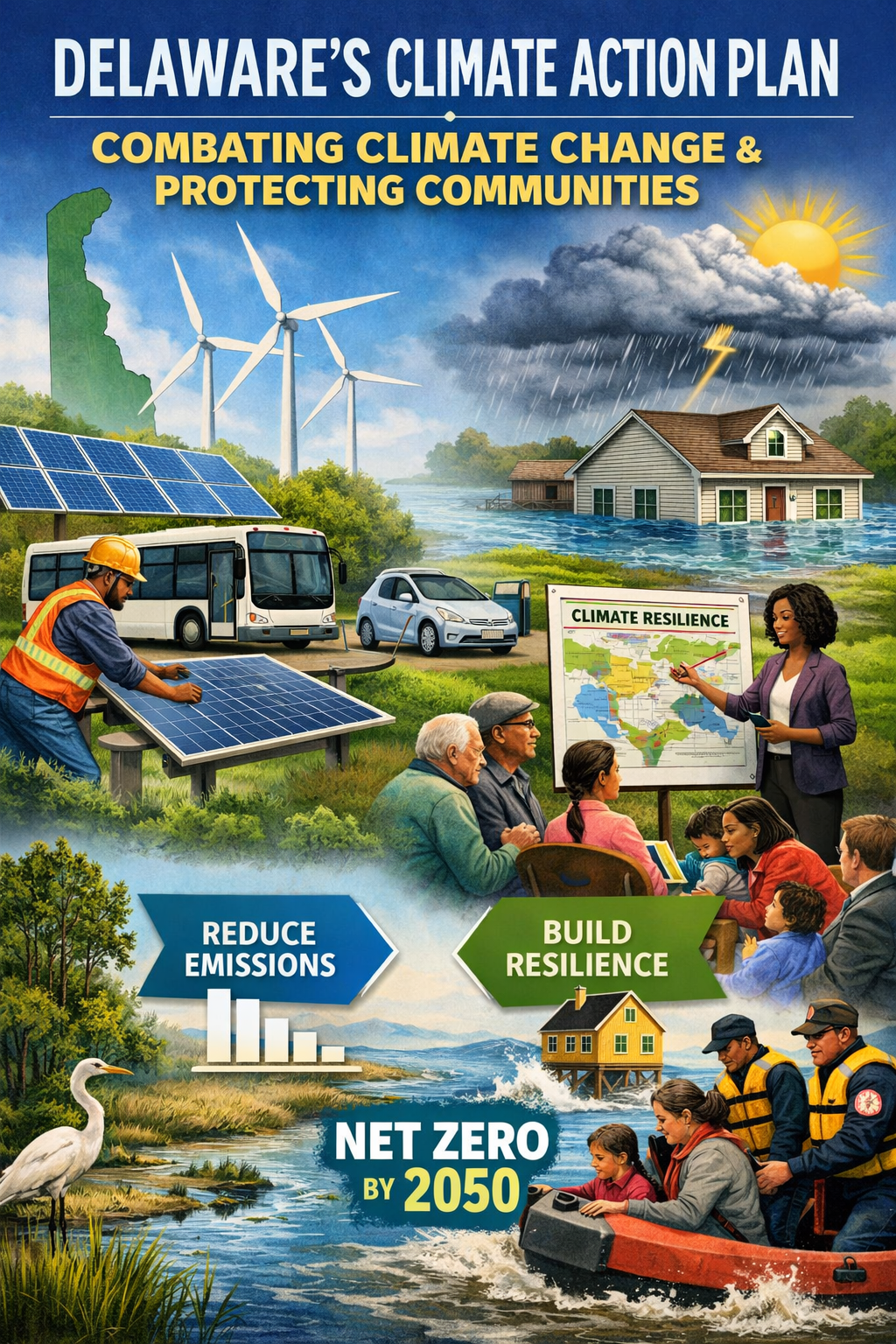
The State of Delaware has released what it describes as the 2025 Climate Action Plan, a practical guide that will help the state to reduce emissions, strengthen resilience, and secure a safer future for the First State.
“Climate change is already reshaping life here in the First State, from extreme rainfall overwhelming our stormwater systems, to heat islands driving up temperatures in our cities, and coastal roads flooding regularly,” Governor Matt Meyer said.
Speaking further, he said “Our Climate Action Plan puts people first by protecting clean air and water for every Delawarean, creating good-paying clean energy jobs, and making our communities safer and more equitable. We’ve seen real progress towards ambitious targets to cut pollution and strengthen resilience, but now we accelerate — because protecting our environment means protecting our families, our economy, and our future.”
Visit de.gov/climateplan to explore the full plan and data. The 2025 Climate Action Plan is also available in Spanish.
According to findings, the 2025 plan is the first since Delaware enacted the Climate Change Solutions Act in 2023, which set a target of cutting greenhouse gas emissions by 50% by 2030 and reaching net-zero by 2050. The first Climate Action Plan was issued in November 2021.
Rea also: Trump withdraws US from over 66 international organization
In addition to identifying near-term actions and long-term strategies for emission reduction and resilience, the 2025 Plan outlines climate risks and future scenarios, highlights recent progress, discusses workforce needs, and directs an all-of-government approach to responding to climate change. It also includes a chapter dedicated to the important intersection between responding to climate change and land use.
Development of the plan included extensive public engagement over an 18-month period. The DNREC Division of Climate, Coastal and Energy hosted public workshops in all three counties, held dozens of community briefings, and gathered input from more than 2,300 Delawareans through events, surveys, and feedback sessions. Outreach to under-resourced communities ensured equity, and lived experiences helped shape the final plan.
Delawareans are living with climate change now and will experience increased impacts as humans release planet-warming pollution into the atmosphere. Sea levels have risen more than a foot along the coast in the past 100 years and are expected to rise another 1.2 to 1.5 feet by 2050. Average temperatures in the state are 3 degrees warmer since records began in 1895 and are projected to increase and addition 3-4 degrees by mid-century.
Delaware’s precipitation patterns are also changing. Already, we are experiencing extreme rainfall more often, and average annual precipitation is forecast to increase, leading to more flooding in cities and towns.
Greg Patterson, Secretary for the Delaware Department of Natural Resources and Environmental Control, said the plan is flexible.
“Actions may change over time based on increased understanding of climate impacts, technology advancements, and stakeholder input,” he said. “While DNREC plays a leading role in implementing the Plan, no single policy or agency can solve this issue alone. It will take all of us working together.”
The 2025 Climate Action Plan outlines a path to near net-zero emissions by 2050 and steps to improve community resilience. It supports transparency, accountability and a collaborative approach to climate planning, with regular updates due in 2027 and 2029. The next Climate Action Plan will be published in 2030.
Governor Meyer and DNREC Secretary Patterson underscored the importance of the plan in guiding statewide efforts but emphasized that climate change is a shared challenge that affects the health, safety, economy, infrastructure, and quality of life across every community and sector in Delaware.
Story was adapted from Delaware.gov.
