The Federal Government has said that Nigeria remains committed to pursuing its transition to a low-carbon economy at a pace that reflects its national realities.
The government said that the country cannot jump or leapfrog into rapid fossil-fuel phase-outs without considering its economic survival and development priorities.
Omoteniyoye Majekodunmi, the Director-General of the National Council on Climate Change (NCCC), made this known at the two-day COP-30 Follow-Up Action Meeting and the launch of a Climate-Smart Electric Vehicle (EV) Recharge Hub in Abuja.
The event, which was put together by BYD Nigeria and Haitong in partnership with the Grassroots Centre for Rights and Civic Orientation, was aimed at turning global climate commitments into concrete local action.
Majekodunmi, who was represented by the Assistant Chief Chemical Engineer, Jummai Vandu, said the Council established under the Climate Change Act 2021 was set up to coordinate climate actions across government, the private sector, civil society, and all stakeholders.
Read also: Researchers shows promising adaptations to climate change in tropical forests
She said the NCCC has become one of the most visible institutions in the climate space because climate impacts now touch every aspect of livelihood, health and national development.
Majekodunmi said Nigeria’s newly developed Just Transition Guideline (2023) provides a roadmap for shifting to a low-carbon economy without undermining jobs, incomes and national stability.
According to her, while the global community is pushing for a rapid phase-out of fossil fuels, Nigeria must design a pathway that protects its economic sovereignty, noting that crude oil still accounts for a major share of government revenue and foreign exchange earnings.
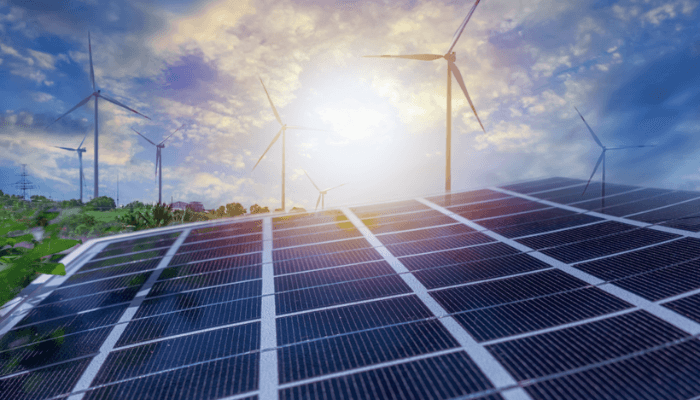
Majekodunmi stressed that although renewable energy sources such as solar and wind are abundant in Nigeria, the major constraint remains infrastructure, adding that initiatives like the BYD Motor Nigeria EV Recharge Hub demonstrate the type of sector-led innovation the country needs.
“When called upon, we ensure that we are present, coordinated, collaborative, and ready to partner because we understand that the impacts of climate change directly affect livelihoods. In the spirit of inclusion, we do not want any Nigerian to be left behind. That is why, in 2023, the National Council on Climate Change developed a just transition guideline for the country,”she said.
Story was adapted from the Guardian.
