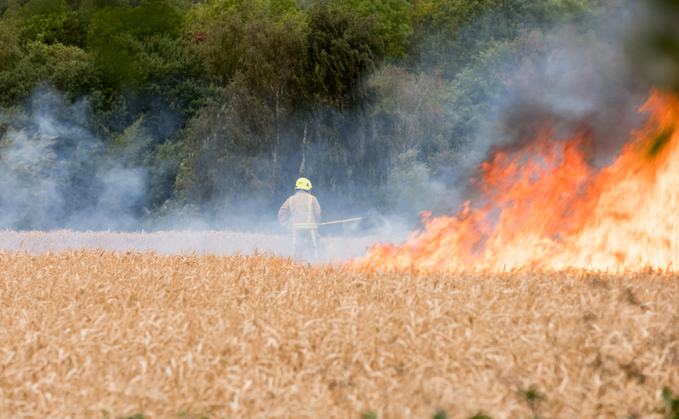
Fire chiefs have said that the UK is not prepared for the impact of climate breakdown, as they called on the government to take urgent action to protect communities.
The National Fire Chiefs Council (NFCC) said the ability of fire services to tackle weather-related emergencies was at risk, despite them often being the primary frontline response to major weather events including flooding, fires caused by heatwaves, and storm-related emergencies, all of which are becoming more common.
The organisation, which represents the bosses of fire and rescue services across the UK, called for further investment and access to longer-term forecasting to enable them to maintain their “business as usual” service while “managing the significant resource and staffing pressures that the response to such incidents creates”.
It said fire and rescue workers were increasingly being forced to go “above and beyond” in responding to flooding and other dangerous weather events, from Storm Babet in October 2023 when more than 1,000 homes were flooded and three people died, to Storm Darragh which killed two people in December last year. January brought Storm Éowyn, which broke wind speed records and caused significant damage, particularly in Scotland, Northern Ireland and Ireland.
Read also: Greenland ice sheet cracking more rapidly than ever, study shows
The Met Office predicts that winters by 2070 will be as much as 4.5C warmer and 30% wetter than they were in 1990, while summers may be up to 6C warmer and 60% drier. The south of England is projected to face temperatures reaching 40C (104F) and rainfall is expected to increase by a quarter.
The NFCC chair, Mark Hardingham, said: “Watching the devastation caused by the wildfires in Los Angeles and the number of recent flooding incidents we have seen in the UK, it is impossible not to be concerned about the very real and immediate threat climate change poses to our planet and what that will mean for our communities in the future.
“Fire and rescue services are on the frontline of responding to extreme weather events and we see firefighters, control officers and other emergency service partners repeatedly going above and beyond to protect their communities. But we are seeing the risks around extreme weather increasing and, without adequate investment and further action from government, our capacity to keep communities safe and protect infrastructure is at risk.”
Story was adapted from the Guardian.
