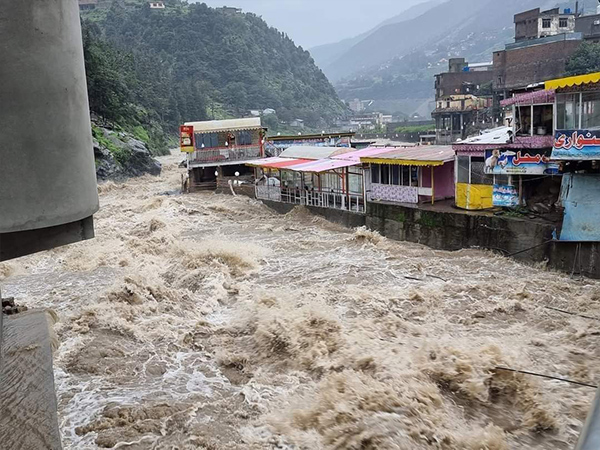
UNICEF has warned that more than three million children need humanitarian assistance and are at increased risk of waterborne diseases, drowning and malnutrition following the most severe flooding in Pakistan’s recent history.
According to UNICEF’s Children’s Climate Risk Index (CCRI), Pakistan is a known ‘climate hotspot’ and country where children are considered ‘extremely high risk’ to the impacts of climate change, ranking 14th out of 163 CCRI-ranked countries and regions.
Children in ‘Extremely high risk’ countries are said to face a deadly combination of exposure to multiple climates and environmental shocks combined with high levels of underlying child vulnerability, due to inadequate essential services, such as water and sanitation, healthcare and education.
UNICEF, which has been working with government and non-government partners to respond to the urgent needs of children and families in affected areas said that 33 million people – including approximately 16 million children – have been affected by this year’s heavy monsoon rains in Pakistan, which have brought devastating rains, floods and landslides.
According to Abdullah Fadil, UNICEF Representative in Pakistan, over 1,100 people including over 350 children have lost their lives, and a further 1,600 have been injured. This is even as over 287,000 houses have been fully, and 662,000 partially, destroyed.
Read also: Indonesia seeks increased action on climate change
“Some major rivers have breached their banks and dams overflowed, destroying homes, farms and critical infrastructure including roads, bridges, schools, hospitals and public health facilities,” he said.
He explained that when disasters hit, children are always among the most vulnerable, adding that the floods in Pakistan have already taken a devastating toll on children and families, and the situation could become even worse.
He however explained that UNICEF is working closely with the Government and other partners to ensure that children affected get the critical support they need as soon as possible.
The rainfall, which is nearly three times the national 30-year average and more than five times the 30-year average in some provinces, has led to the Government declaring a national emergency, with 72 districts declared ‘calamity hit’ – mostly in Balochistan and Sindh, the two worst-affected provinces, as well as in Khyber Pakhtunkhwa and Punjab.
Cases of diarrhoea and water-borne diseases, respiratory infection, and skin diseases have also been reported, with 40 per cent of children already reported to suffer from stunting, caused by chronic undernutrition, before the floods hit.
In affected areas, 30 per cent of water systems are estimated to have been damaged, further increasing the risk of disease outbreaks with people resorting to open defecation and drinking unsafe water.
Reports have emerged of significant damage to education infrastructure as 17,566 schools have been damaged/destroyed, further jeopardizing the education of children. After two years of pandemic school closures in the last few years, children once again risk further disruption to their learning, in areas where one-third of girls and boys were already out-of-school before the crisis.
Story was adapted from UNICEF.
