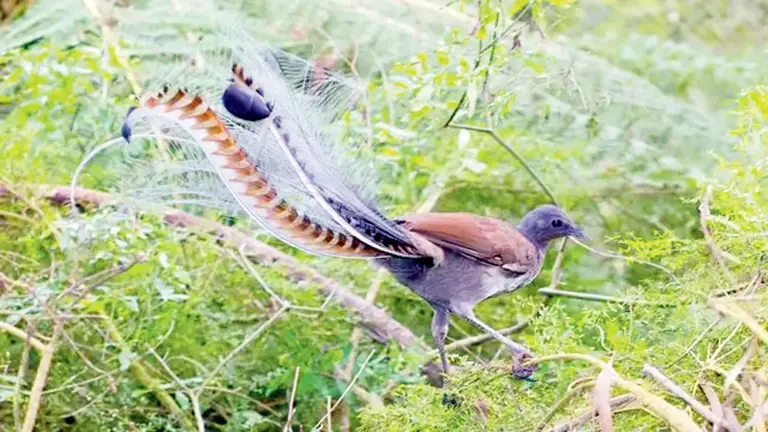
Flinders University paleontology researchers—with local fossil experts—have discovered how prolific shorebirds, including the Plains-wanderer, once lived across South Australia’s South-East during wetter times up to 60,000 years ago.
The experts link a phase of pronounced drying from about 17,000 years ago as being the likely cause for the decline of many of the nine or more fossil shorebird species found in just one of the World Heritage-listed Naracoorte Caves.
“Shorebirds are rare in the fossil record, so finding so many in one cave (Blanche Cave) was a surprise,” says Flinders Ph.D. candidate Karl Lenser, the lead author of the study published in Palaeontologia Electronica.
“This shows that the wetlands and mudflats, where birds like plovers, sandpipers and snipes feed, were much more common in the region during the last ice age.”
Climate change and shrinking habitat are causing living shorebird populations in Australia to fall. Understanding how these species responded to past climate change may be key to predicting how populations will be affected in the future, researchers say.
Read also: Scientists warn global warming could breach 1.5°C earlier than predicted
Researchers were particularly puzzled by the fossils of one bird. The Plains-wanderer—a small, endangered bird which is found predominantly in small populations in Victoria and New South Wales—were one of the most common species of bird identified in the study.
Over half of the nearly 300 bones examined in the study were identified as Plains-wanderers.
“Living Plains-wanderers are now very selective about their habitat, but other fossils from Naracoorte show that the area was probably a woodland … a far cry from the treeless open grasslands Plains-wanderers inhabit today,” says Lenser, from the Flinders College of Science and Engineering Paleontology Laboratory.
Naracoorte is the only fossil site in Australia where Plains-wanderers are found in such high numbers, suggesting that events in the last 14,000 years caused a large decline in populations of this intriguing bird.
This decline was associated with the Plains-wanderer becoming limited to a narrower range of habitats where trees are absent, rather different to the woodlands it occupied during the last hundred thousand years.
Story was adapted from Phys.org.
