More than 60 leading climate change scientists have said that Carbon offsets used by corporations around the world to lower their reportable greenhouse gas emissions are “ineffectual” and “hindering the energy transition”.
A pledge which was signed by scientists from nine countries, including the UK, the US and Australia, said that the “only path that can prevent further escalation of climate impacts” was “real zero” and not “net zero”. The “real zero pledge” was organised by the Lethal Humidity Global Council, a group of scientists, health experts and policymakers.
Among the signatories are Prof Michael Mann, of the University of Pennsylvania; Prof Johan Rockström, director of the Potsdam Institute for Climate Impact Research; and Bill Hare, founder of Climate Analytics and a member of a UN expert group that has warned about the overuse of carbon offsets.
The pledge reflects growing concerns that large amounts of carbon offsets generated from forest-related projects or, in Australia, from avoided land clearing, and then traded, may not have actually reduced emissions.
The Lethal Humidity Global Council is a group focused on the threat of rising temperatures that, when combined with high humidity, can threaten human health.
Read also: Oxfam: Carbon emissions of richest 1% increase hunger, poverty and deaths
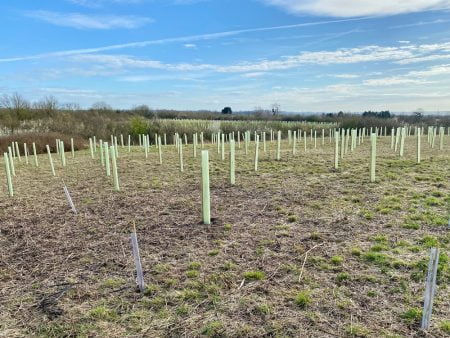
Prof Katrin Meissner, director of the Climate Change Research Centre at the University of New South Wales and a signatory, said many offset programs focused on growing trees or allowing areas to regrow.
But she said these could not lock carbon away forever because, when the trees die, such as in droughts or wildfires, they rereleased the carbon back into the atmosphere.
“A reliance on carbon offsets without the needed emission reductions is dangerous and detrimental,” she said.
“To keep global warming within the guardrails of the Paris agreement, the timeframe is now so tight that there is no space for companies to use offsetting to continue high-carbon activities. We need to turn the fossil fuel taps off, all of them.”
Prof Sarah Perkins-Kirkpatrick, another signatory and climate scientist at Australian National University, said: “In many ways ‘net zero’ is a Band-Aid solution because it doesn’t fix the problem at the source.”
Russell Reichelt, a veteran public servant and Australian ambassador on sustainable oceans, said many offsets relied on the ability of the land and ocean to act as a sink for greenhouse gas emissions.
But he was concerned that these natural sinks, such as forests and oceans, were already struggling to absorb the extra CO2 humans are emitting.
Story was adapted from the Guardian.
