Top Posts
Study shows microplastics weaken oceans’ carbon-absorbing role
Delaware moves to address climate change, protect communities
Trump withdraws US from over 66 international organization
Study finds climate change accelerates tree deaths across...
Report: Climate change strains Croatia’s power system
NEMA asks flood‑prone communities to adopt risk reduction
Displaced Women in Nigeria Suffer Extreme Heat that...
Study shows forcing lifestyle changes could weaken support...
Women engineers donate 100 tree seedlings to HJRBDA
Court ruling blocks Hawaii’s climate change tourist tax...
EcoNai Newsroom
  • Newsround
  • Nigeria
  • Africa
  • World
World

Security leaders say Australia needs ‘wartime mobilisation’ response to climate disaster

by By Matthew Eloyi December 8, 2022
written by By Matthew Eloyi December 8, 2022
664

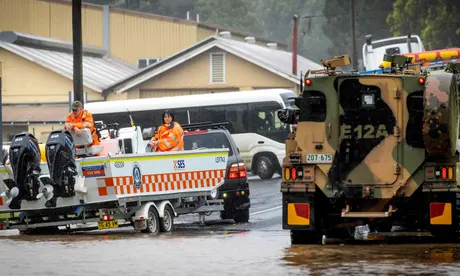
Former Australian security officials have advised a review of the country’s defence strategy, noting that it must respond to the climate disaster with “wartime mobilisation.”

The Australian Security Leaders Climate Group said that the country’s defence and security strategy has to be fundamentally reframed away from geopolitical rivalry, adding that it must press for unprecedented global cooperation on the climate catastrophe.

The security leaders also insisted that despite the US and Australia’s pledge to push stronger global action to address the climate disaster, the problem is still seen as a secondary concern rather than a top-order threat.

Read also: Survey shows few SMEs in North America have climate action plans

The group cautioned in a submission to the defence strategic review being done by former ADF head Angus Houston and former defence minister Stephen Smith, that the ADF must meet increasing demands to respond to disasters both domestically and in the region.

“Global inaction has resulted in climate change becoming an immediate existential threat to humanity and, together with nuclear war, is the greatest threat to the security of Australia and its people,” the submission showed”. “Addressing that threat requires an emergency response, akin to wartime mobilization,”.

According to the submission, the climate crisis can only be resolved by a collective decision to intensify climate action to an emergency level, making climate mitigation the top priority for politics and the environment in Australia and the rest of the world.

Story was adapted from The Guardian.

Climate crisisResponseWartime mobilisation
0 comment 0 FacebookTwitterPinterestEmail
admineconai

previous post
Survey shows few SMEs in North America have climate action plans
next post
AfDB, Global Center on Adaptation build capacity to access climate adaptation finance

Related Posts

Study shows microplastics weaken oceans’ carbon-absorbing role

January 8, 2026

Delaware moves to address climate change, protect communities

January 8, 2026

Trump withdraws US from over 66 international organization

January 8, 2026

Study finds climate change accelerates tree deaths across...

January 6, 2026

Report: Climate change strains Croatia’s power system

January 6, 2026

Study shows forcing lifestyle changes could weaken support...

January 1, 2026

Court ruling blocks Hawaii’s climate change tourist tax...

January 1, 2026

Brazilian Women To Join New UN Climate Assessment...

December 31, 2025

New report warns climate change driving extreme weather...

December 31, 2025

UNEP recognizes pacific students for securing ICJ AO...

December 19, 2025

Leave a Comment Cancel Reply

Save my name, email, and website in this browser for the next time I comment.

Newsletter

Subscribe my Newsletter for new blog posts, tips & new photos. Let's stay updated!

  • Facebook
  • Twitter
  • Instagram
  • Linkedin
  • Bloglovin
  • Vimeo

@2021 - All Right Reserved. Designed and Developed by Eco-Nai+

EcoNai Newsroom
  • Newsround
  • Nigeria
  • Africa
  • World