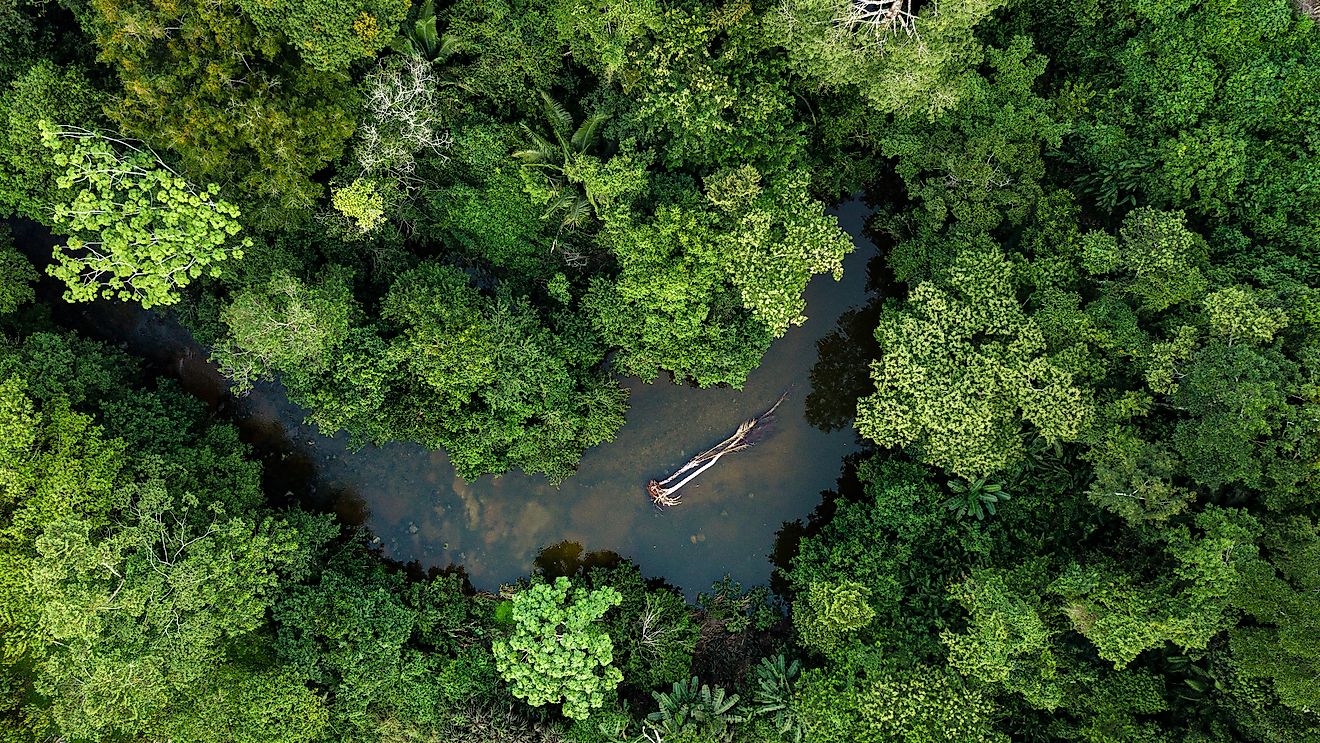
A new research that underscores the need for urgent action to save the world’s great natural climate stabilisers has shown that Africa’s forests have turned from a carbon sink into a carbon source.
According to the findings of the research, the alarming shift, which has happened since 2010, means all of the planet’s three main rainforest regions – the South American Amazon, south-east Asia and Africa – have gone from being allies in the fight against climate breakdown to being part of the problem.
Human activity is the primary cause of the problem. Farmers are clearing more land for food production. Infrastructure projects and mining are exacerbating the loss of vegetation and global heating – caused by the burning of gas, oil and coal – thereby degrading the resilience of ecosystems.
Scientists found that between 2010 and 2017, African forests lost approximately 106bn kg of biomass per year, which is equivalent to the weight of about 106m cars. The worst affected were the tropical moist broadleaf forests in Democratic Republic of Congo, Madagascar and parts of west Africa
The study, published on Friday in Scientific Reports, was led by researchers at the National Centre for Earth Observation at the Universities of Leicester, Sheffield and Edinburgh. Using satellite data and machine learning, they tracked more than a decade of changes in the amount of carbon stored in trees and woody vegetation.
They discovered that Africa gained carbon between 2007 and 2010, but since then widespread forest loss has tipped the balance so the continent is contributing more CO2 into the atmosphere.
Read also: Flooding kills 69 in Sumatra as rescue crews search rivers for survivors
The authors said the results show that urgent action is needed to stop forest loss or the world risks losing one of its most important natural carbon buffers. They say that Brazil has launched an initiative, the Tropical Forest Forever Facility (TFFF), which aims to mobilise more than $100bn (£76bn) for forest protection by paying countries to leave their forests untouched.
So far, however, only a handful of nations have invested a total of $6.5bn in the initiative.
Prof Heiko Balzter, a senior author and director of the Institute for Environmental Futures at the University of Leicester, said the study showed the importance of scaling up the TFFF rapidly.
“Policymakers ought to respond by putting better safeguards in place to protect the world’s tropical forests,” Balzter said.
“Four years ago, at Cop26 in Glasgow, world leaders declared their intention to end global deforestation by 2030. But progress is not being made fast enough. The new TFFF is intended to pay forested nations for keeping their trees rooted in the ground. It is a way for governments and private investors to counteract the drivers of deforestation, such as mining for minerals and metals, and agricultural land take. But more countries need to pay into it to make it work.”
Story was adapted from the Guardian.
