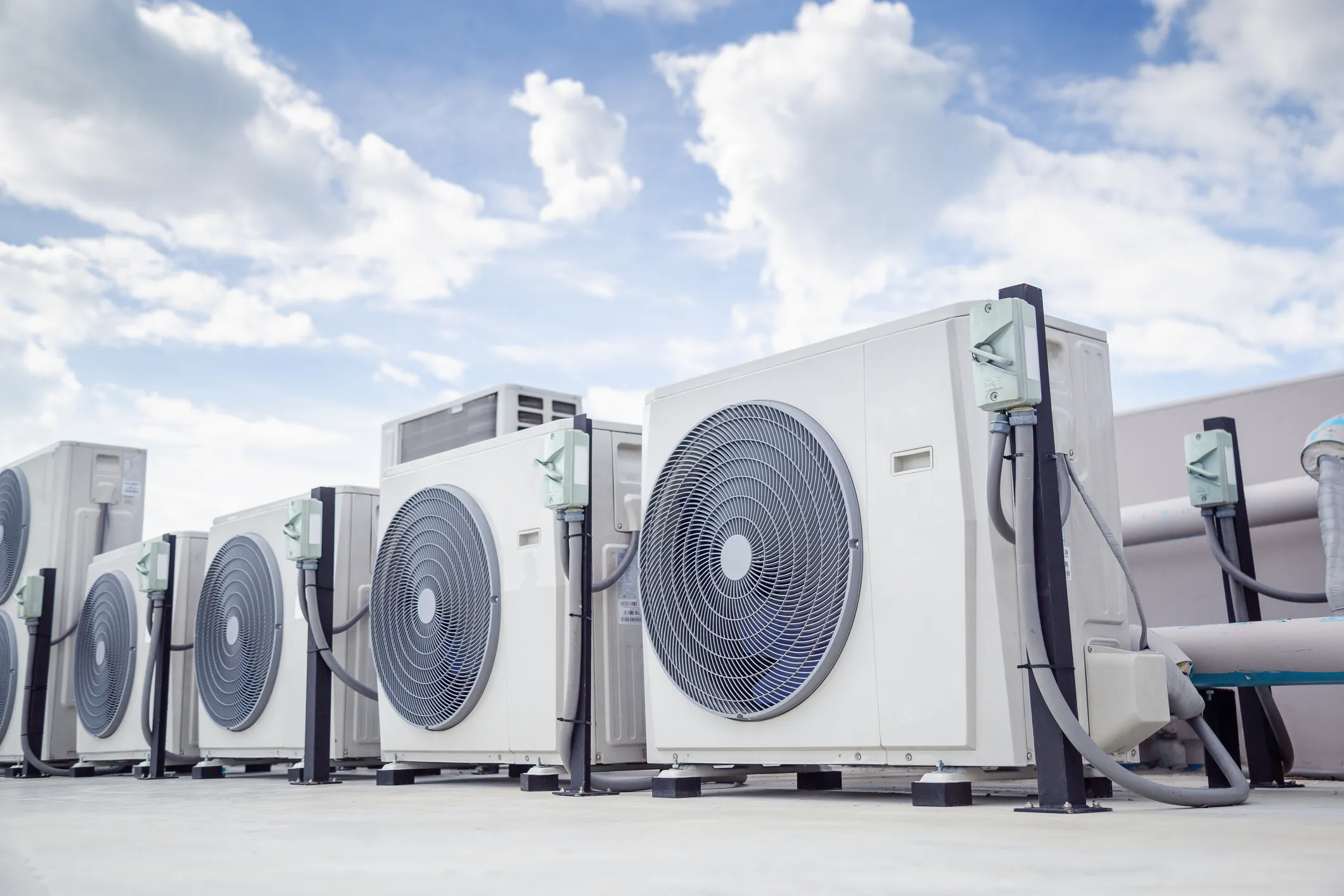
A new study, published today in the journal Nature Communications, has shown that as global temperatures rise, air conditioners, which people turn to to keep themselves cool could be a significant contributor to increased emissions and an even warmer planet.
The study estimates that, by 2050, air-conditioning use is expected to more than double as more people turn to air conditioning to stay cool amidst rising temperatures, contributing significantly to expected greenhouse gas emissions.
“What’s more, as incomes rise in developing countries and more low and medium-income regions achieve the same access to AC as high-income regions, we could see an additional 0.015°C to 0.05°C of warming by 2050,’the study showed.
The rise could create what the researchers call a “feedback loop,” in which closing the inequality gap and improving access to air conditioning would put global climate targets out of reach. Regions most vulnerable to rising temperatures such as South Asia and Africa, currently have the least access to air-conditioning. In contrast, wealthier regions like Europe and North America have lower cooling needs but higher air-conditioning usage.
“The study reveals that if all low‑income regions gained the same access to air-conditioning as rich regions, related global emissions would jump dramatically—adding up to 0.05°C extra warming even in the most climate‑friendly scenario,” Hongzhi Zhang, from the Beijing Institute of Technology, the first author of the study, said in a press release.
It’s long been known that air conditioning contributes to global warming. Existing cooling equipment uses hydrofluorocarbon refrigerants, which are potent greenhouse gases. One 2023 estimate from the U.N. claims that refrigeration and air conditioning are responsible for 7% of global emissions.
But despite the impact, more and more people are turning to AC to stay cool. The number of residential air conditioning units in operation has tripled since 2000, reaching more than 1.5 billion in 2022, according to the International Energy Agency (IEA). That number is only going to rise—more than 45% of the global population is expected to own an air conditioner by 2030—compared to 37% in 2023.
The team used a combination of climate science, energy modelling, and inequality analysis to map out future scenarios ranging from strong climate action to high emissions. The researchers estimated how much cooling people will need as temperatures rise—taking into consideration factors such as humidity and population. They then put those estimates into a global energy–economy model to predict how many air conditioners people will buy, how much electricity will be used, and how much greenhouse gas emissions the devices will produce.
Story was adapted from Time.
