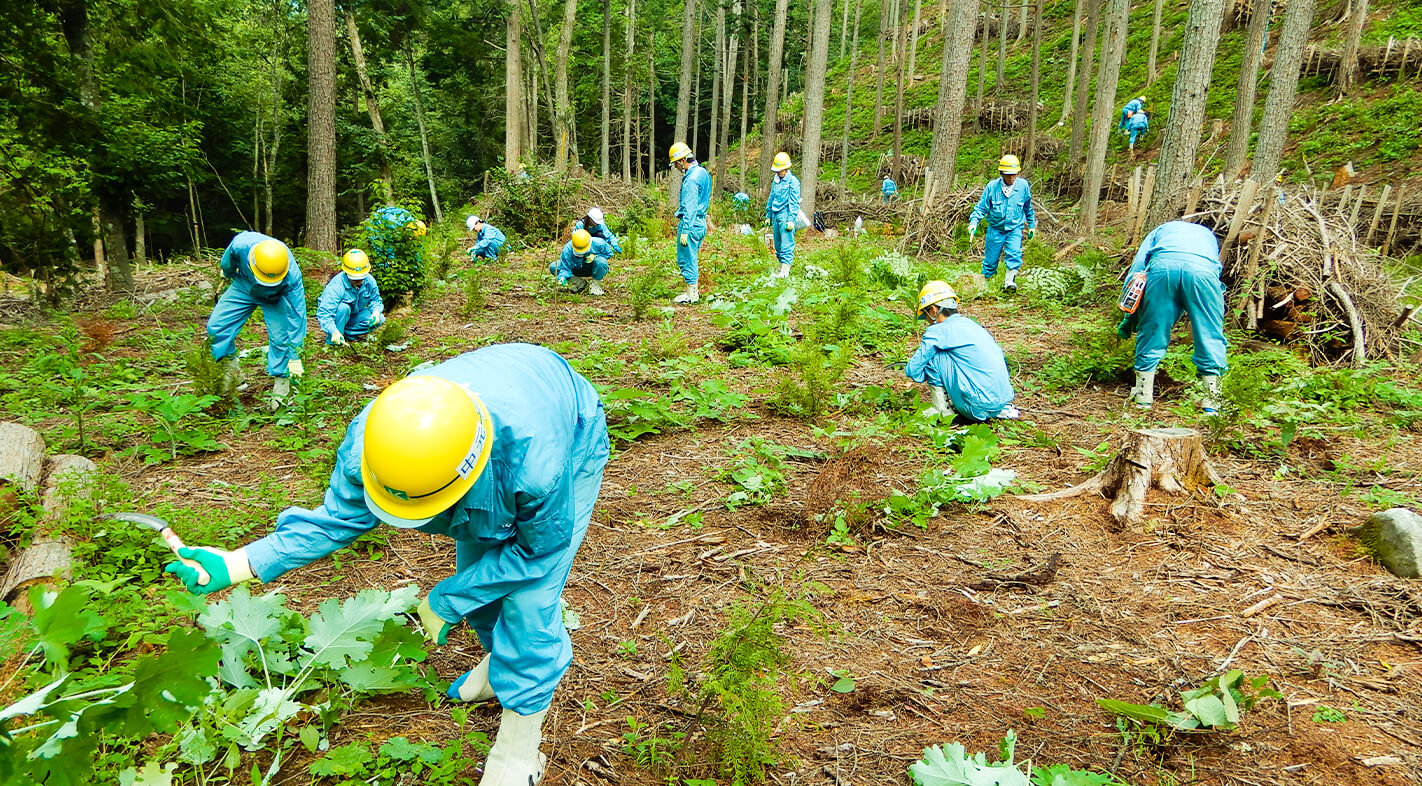
A new study-published on Monday in the journal Nature- has found that forest conservation and restoration could make a major contribution to tackling the climate crisis as long as greenhouse gas emissions are slashed.
Scientists say that 226 gigatonnes of carbon could be sequestered, equivalent to nearly 50 years of US emissions for 2022 when existing trees are allowed to grow old in healthy ecosystems and restoring degraded areas. But they caution that mass monoculture tree-planting and offsetting will not help forests realise their potential.
Latest reports suggest that humans have cleared about half of Earth’s forests and continue to destroy places such as the Amazon rainforest and the Congo basin that play crucial roles in regulating the planet’s atmosphere.
Published as part of a collaboration between hundreds of leading forest ecologists, the research estimates that outside of urban agricultural areas in regions with low human footprints where forests naturally exist, they could draw down large amounts of carbon.
It found that about 61% of the potential could be realised by protecting standing forests, allowing them to mature into old growth ecosystems like Białowieża forest in Poland and Belarus or California’s sequoia groves, which survived for thousands of years. The remaining 39% could be achieved by restoring fragmented forests and areas that have already been cleared.
Read also: Researchers develop floating factories to make Green Fuel
The researchers underlined the importance of biodiversity helping forests reach their carbon drawdown potential, warning that planting huge numbers of single species would not help and urgent cuts to fossil fuel emissions were needed. This is amid greenwashing concerns around nature’s role in climate crisis mitigation.
Rising numbers of forest fires and higher temperatures due to the climate crisis would be likely to reduce the potential, they said. “Most of the world’s forests are highly degraded. In fact, many people have never been in one of the few old growth forests that remain on Earth,” said Lidong Mo, a lead author of the study. “To restore global biodiversity, ending deforestation must be a top priority.”
Recall that at Cop26 in 2021, world leaders pledged to halt and reverse deforestation by the end of this decade, although data shows that countries are currently off track. Brazil, Colombia and Indonesia are among nations making progress, however. The researchers said meeting this target, along with making good on UN climate and biodiversity agreements, was crucial to forests reaching their full potential.
“Conserving forests, ending deforestation and empowering people who live in association with those forests has the power to capture 61% of our potential. That’s huge. It’s potentially reframing forest conservation. It’s no longer avoided emissions, it’s massive carbon drawdown, too,” said Tom Crowther, the head of the Crowther Lab at ETH Zurich. He said thousands of different project and schemes were needed to preserve and revive forests.
“It can be achieved by millions of local communities, Indigenous communities, farmers and foresters who promote biodiversity. It could be agroforestry for cacao, coffee or banana, natural regeneration, rewilding or creating habitat corridors. They’re successful when nature becomes the economic choice. It’s not easy but it’s doable.”
Story was adapted from the Guardian.
