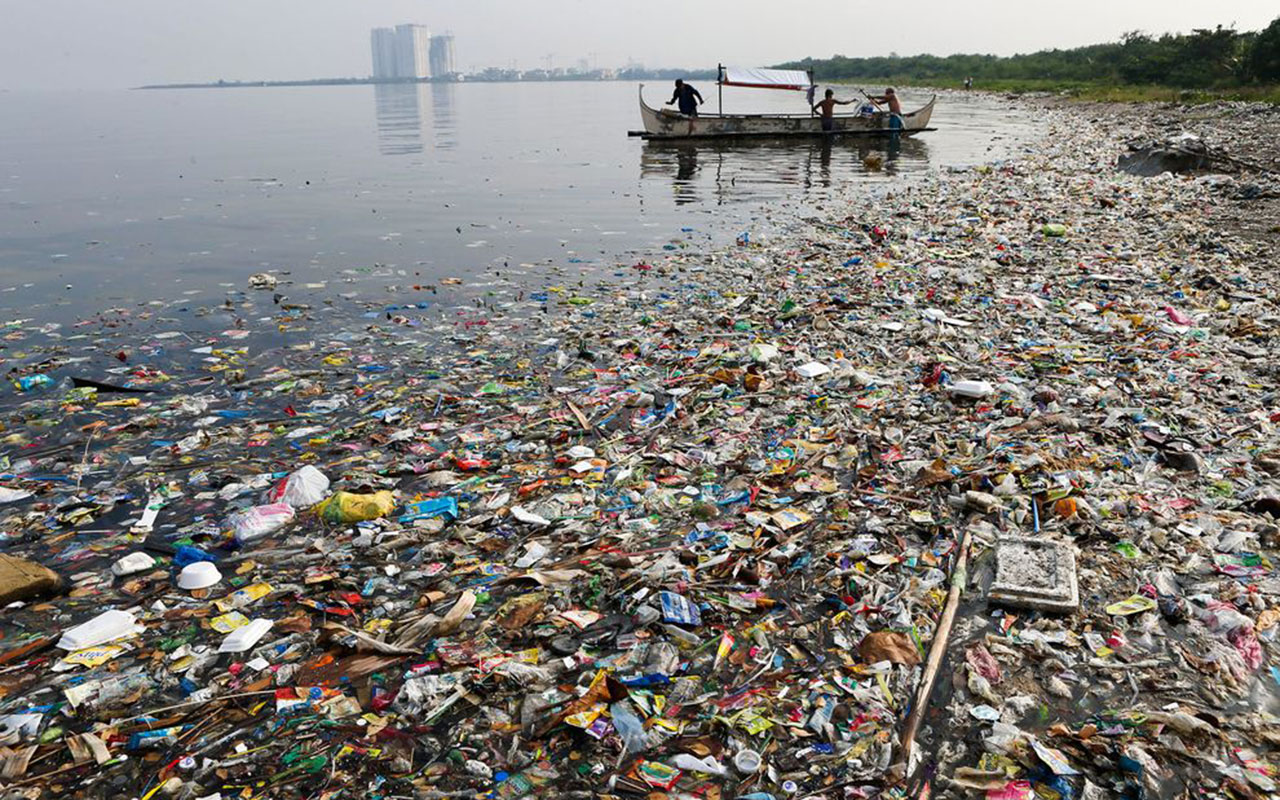
A new scientific study has shown that Microplastics accumulating in the world’s oceans are reducing their ability to absorb carbon dioxide, weakening one of Earth’s most important natural defenses against global warming.
Researchers say that tiny plastic particles are disrupting marine biological processes that allow oceans to store carbon and regulate global temperatures. Oceans currently absorb about a quarter of human-caused carbon dioxide emissions each year.
“Oceans are the planet’s largest carbon sink, and microplastics are undermining this natural shield against climate change,” said Ihsanullah Obaidullah of the University of Sharjah, one of the study’s authors.
The findings were published in the Journal of Hazardous Materials and are based on a review of existing scientific research rather than new laboratory experiments. The authors also highlighted the role of microbes that colonize plastic particles, known as the “plastisphere,” which can alter carbon and nitrogen cycles and contribute to greenhouse gas emissions.
Among other things, the study found that microplastics interfere with the biological carbon pump, a natural process driven by phytoplankton and zooplankton that transfers carbon from surface waters to the deep ocean. According to the researchers, microplastics reduce photosynthesis in phytoplankton and impair metabolism in zooplankton, weakening this mechanism.
Read also: Delaware moves to address climate change, protect communities
“Microplastics disrupt marine life, weaken the biological carbon pump and even release greenhouse gases as they degrade,” Obaidullah said, warning that long-term effects could include ocean warming, acidification, and biodiversity loss, with consequences for food security and coastal communities.
The study notes that while evidence of ecological harm is growing, the full climate impact of microplastics remains poorly understood.
Global plastic production is estimated at 400 to 430 million tons annually, with less than 10% recycled. Without stronger controls, production could triple by 2060, the researchers warned.
The authors urged governments and international bodies to treat plastic pollution and climate change as interconnected challenges, calling for accelerated efforts to reduce plastic use, improve waste management, and expand research into the climate effects of microplastics.
“Our next step is to quantify the climate impact of microplastics and develop integrated solutions,” Obaidullah said, adding that the issue represents a broader global sustainability challenge rather than an isolated environmental problem.
Story was adapted from AA.
