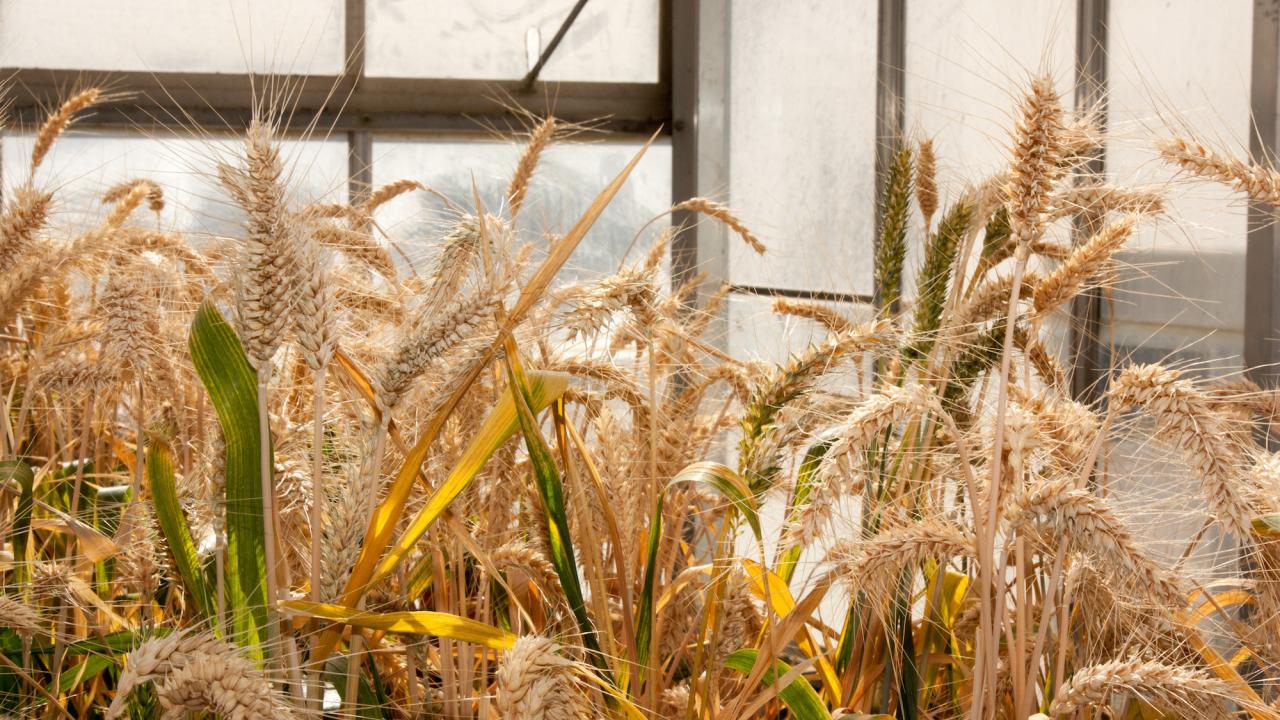
The University of California, Davis has announced that it is leading a five-year, $15 million research project to increase wheat breeding to meet new climate realities, as well as train a new generation of plant breeders.
Wheat is unlike other crops in that 60% of the plant varieties — generating about $4 billion in annual production — are developed by public breeding programs rather than private corporations. In many states, wheat growers tax themselves to support basic breeding efforts at public institutions like UC Davis.
The $15 million grant from the U.S. Department of Agriculture’s National Institute of Food and Agriculture will create a coordinated consortium of 41 wheat breeders and researchers from 22 institutions in 20 states.
Researchers from Mexico and the United Kingdom are expected to also participate.
According to Jorge Dubcovsky, a plant sciences distinguished professor who is leading the grant research, “Everything is less stable,”. “Everything is changing so you need to be fast. You need to be able to adapt fast.”
Read also: Want to stay informed about climate change? Here are 10 podcasts to listen to in 2022
In an announcement about this grant and others related to breeding, NIFA said that breeding crops for the future will require new traits, breeding platforms built for quick transfer of traits to elite cultivars, coordination of breeding efforts in public and private domains, and training for current and future plant breeders and researchers.
NIFA said that the program involves on-the-ground research, identifying molecular markers and data analysis from multiple institutions to determine genes that will help wheat crops mitigate the effects of climate change.
Plant breeding will follow to prove those findings.
The NIFA grant money is expected to lead to more coordinated, sophisticated research. For Dubcovsky, “this grant allows us to do breeding at a level that a good, modern company would do,”. “This grant is essential to maintain modern and effective public breeding programs in the U.S.”
Dubcovsky further explained that the consortium will bring together data and research from across institutions, allowing for more expansive analysis while reducing redundancies. “We can take advantage of the data from everybody,” he said. “By doing that we don’t need to duplicate efforts.”
A team in Texas is expected to analyze plant images taken from drones at each institution to extract information about plant growth, water use, nitrogen levels and other data.
“Using technology, we can see beyond our human capabilities,” Dubcovsky said, adding that “You can extract a huge amount of information from every plant variety.”
Story was adapted from UCDAVIES.
