Top Posts
Study shows microplastics weaken oceans’ carbon-absorbing role
Delaware moves to address climate change, protect communities
Trump withdraws US from over 66 international organization
Study finds climate change accelerates tree deaths across...
Report: Climate change strains Croatia’s power system
NEMA asks flood‑prone communities to adopt risk reduction
Displaced Women in Nigeria Suffer Extreme Heat that...
Study shows forcing lifestyle changes could weaken support...
Women engineers donate 100 tree seedlings to HJRBDA
Court ruling blocks Hawaii’s climate change tourist tax...
EcoNai Newsroom
  • Newsround
  • Nigeria
  • Africa
  • World
World

Scientists say space bubbles can reverse climate change impact

by admineconai June 17, 2022
written by admineconai June 17, 2022
827

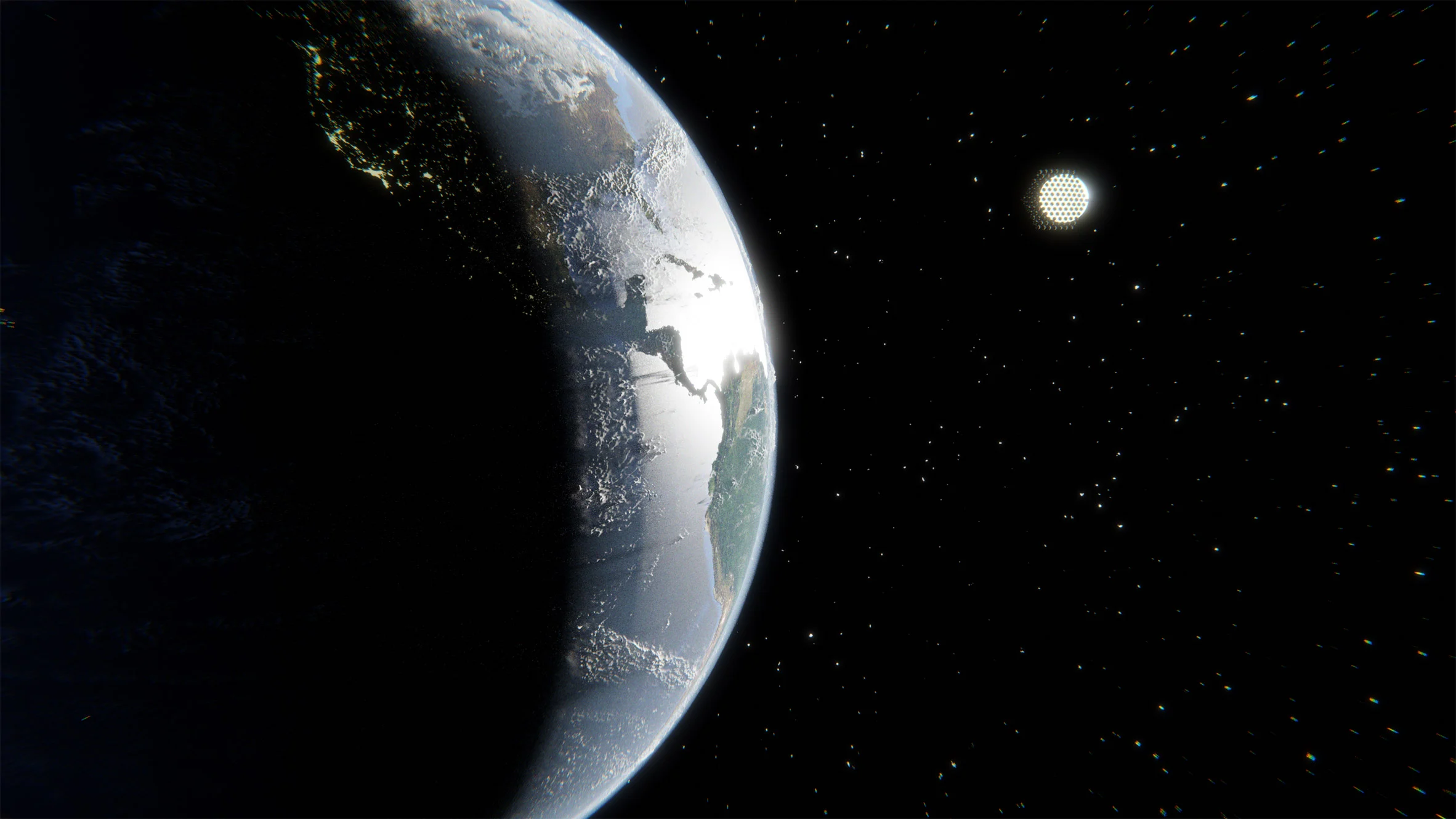
A group of researchers at the Massachusetts Institute of Technology has proposed that the worst impact of climate change can be mitigated with space bubbles.

The scientists have already outlined what they refer to as a strategy in which a huge raft of bubbles, carefully positioned between Earth and the Sun, would deflect sunlight (and thus heat) to stop further global warming.

According to a web page dedicated to the solution, “Geoengineering might be the final and only option,”. “Yet, most geoengineering proposals are earth-bound, which poses tremendous risks to our living ecosystem,”.

The scientists said that “If we deflect 1.8% of incident solar radiation before it hits our planet, we could fully reverse today’s global warming. They add that the bubble array would be made of inflatable shields of thin silicon or another suitable material, according to the team.

Read also: American Medical Association says climate change, public health crisis

They explained that the bubble cluster would be placed in outer space at a Lagrange Point, where the Sun’s and Earth’s gravitational pulls create a stable orbit, adding that if the plan becomes a reality in the future, the completed array would be roughly the size of Brazil.

They admitted that one of the main concerns with their proposal would be the logistics of fabricating a large film, transporting it into space, and then unfolding it to form the bubble raft, suggesting that fabricating the spheres in outer space minimizes shipping costs.

“The bubbles can be intentionally destroyed by breaking their surface equilibrium, this would make the solar geoengineering solution fully reversible and significantly reduce space debris,” the researchers said

The researchers who further pointed to the difficulties of maintaining the integrity of the bubble shield noted that an effective replenishment rate will be studied to ensure the shield maintains its size, together with strategies to guarantee a smooth end-of-life transition.

Story was adapted from GISMODE.

Climate changeImpactReverseSpace bubbles
0 comment 0 FacebookTwitterPinterestEmail
admineconai

previous post
American Medical Association says climate change, public health crisis
next post
Expert says Senegal leading Africa’s path to resilient recovery

Related Posts

Study shows microplastics weaken oceans’ carbon-absorbing role

January 8, 2026

Delaware moves to address climate change, protect communities

January 8, 2026

Trump withdraws US from over 66 international organization

January 8, 2026

Study finds climate change accelerates tree deaths across...

January 6, 2026

Report: Climate change strains Croatia’s power system

January 6, 2026

Study shows forcing lifestyle changes could weaken support...

January 1, 2026

Court ruling blocks Hawaii’s climate change tourist tax...

January 1, 2026

Brazilian Women To Join New UN Climate Assessment...

December 31, 2025

New report warns climate change driving extreme weather...

December 31, 2025

UNEP recognizes pacific students for securing ICJ AO...

December 19, 2025

Leave a Comment Cancel Reply

Save my name, email, and website in this browser for the next time I comment.

Newsletter

Subscribe my Newsletter for new blog posts, tips & new photos. Let's stay updated!

  • Facebook
  • Twitter
  • Instagram
  • Linkedin
  • Bloglovin
  • Vimeo

@2021 - All Right Reserved. Designed and Developed by Eco-Nai+

EcoNai Newsroom
  • Newsround
  • Nigeria
  • Africa
  • World